


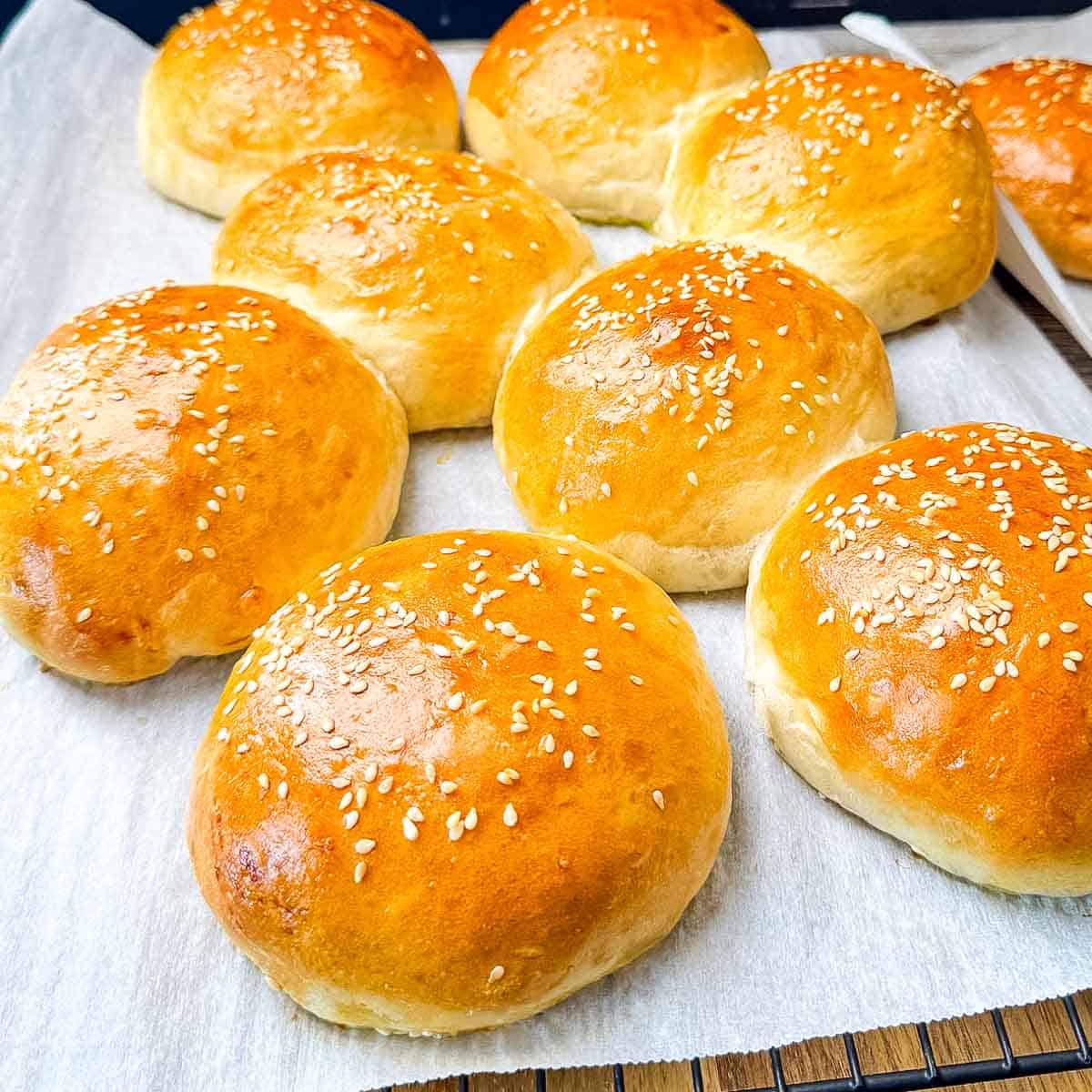
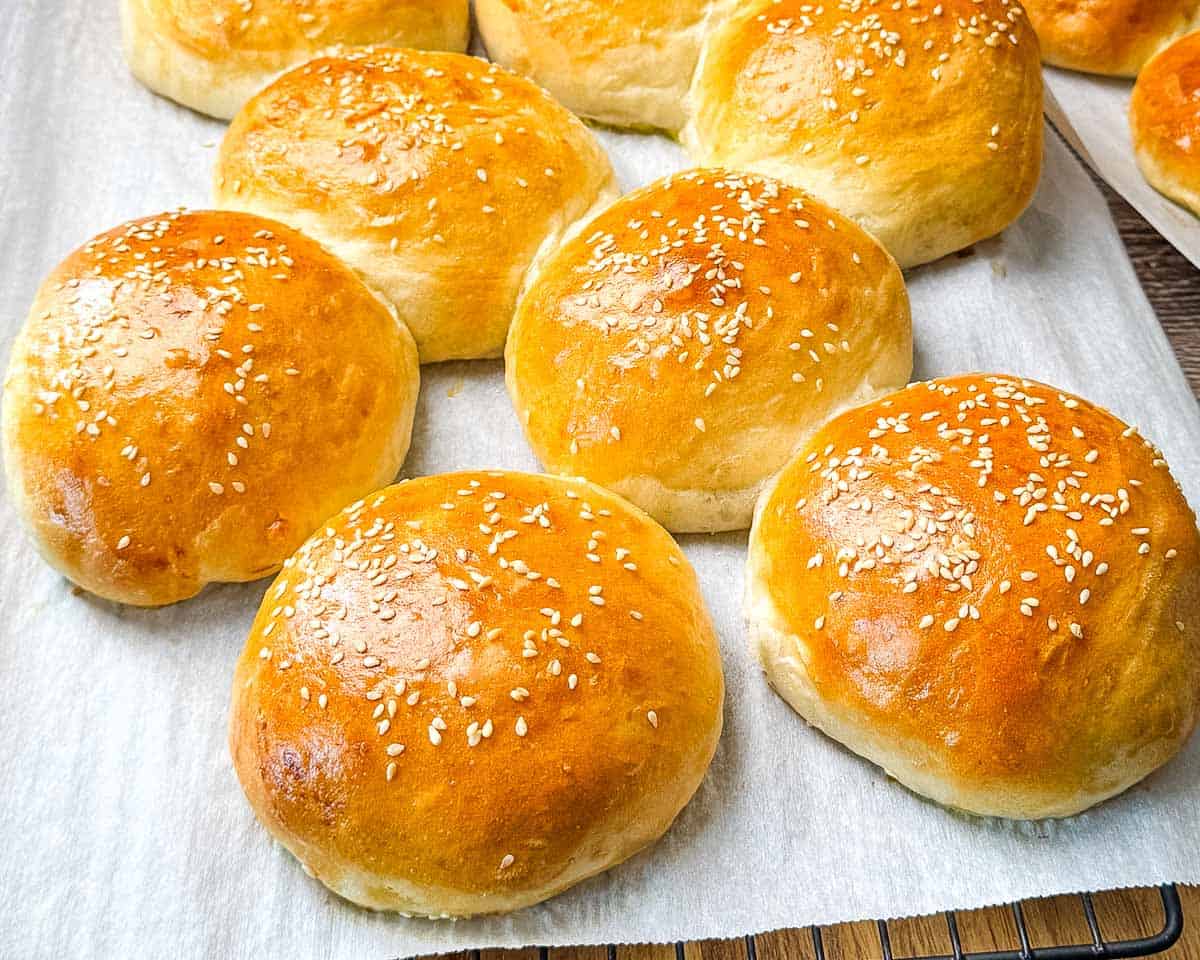
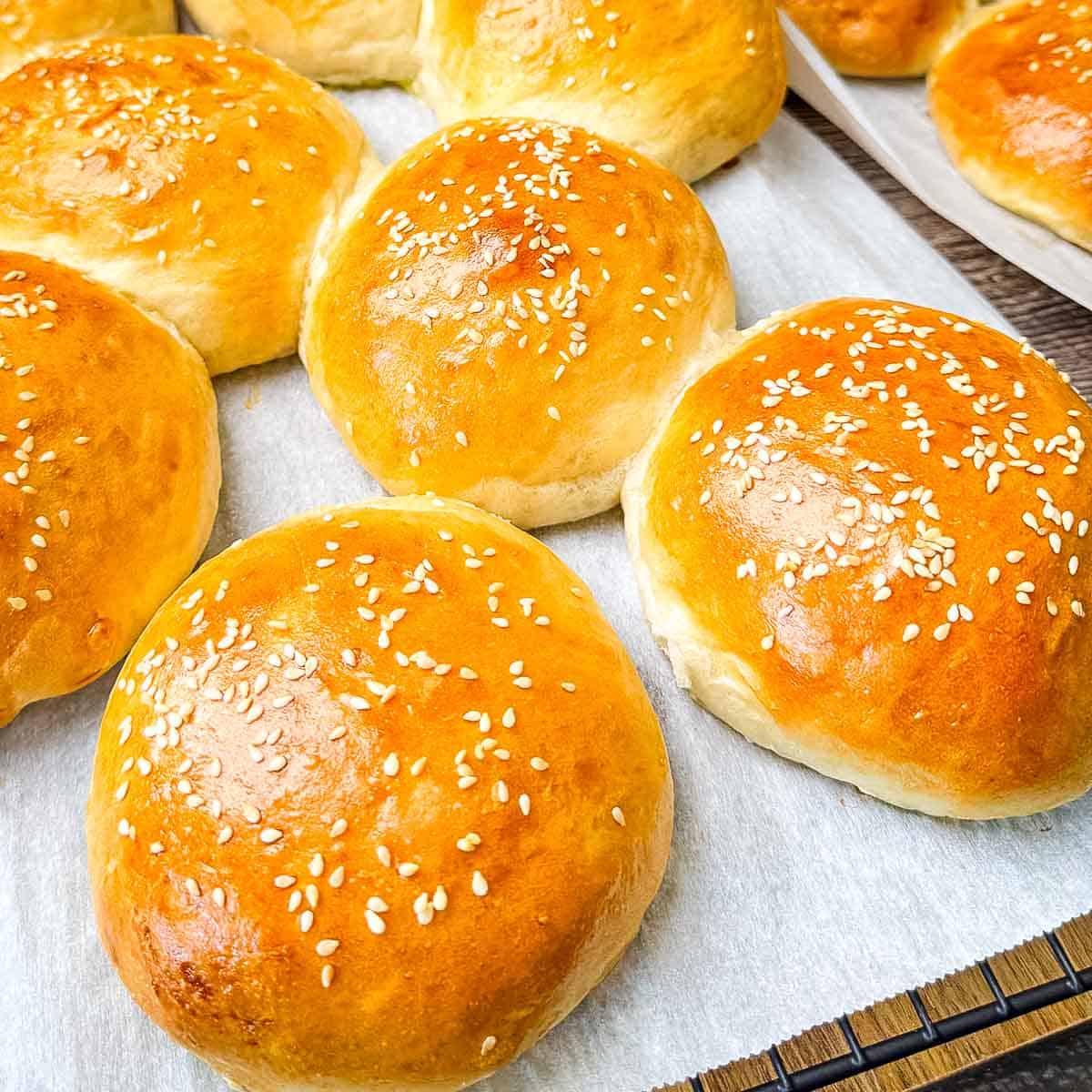
These Sourdough Discard Hamburger Buns are soft, fluffy, golden brown, and sturdy enough to hold even the juiciest burger without falling apart. Made with simple pantry staples and plenty of sourdough discard, this recipe makes a large batch of buns that are perfect for backyard cookouts, meal prep, or stocking the freezer.
Want to save this recipe?
Enter your email & I'll send it to your inbox. Plus, get great new recipes from me every week!
Recipe at a Glance
- Yield: 22 large burger buns (or divide smaller for more medium buns)
- Total Time: About 2.5-3 hours, including both rises
- Texture: Soft, fluffy, and sturdy enough for loaded burgers.
- Method: Hand kneading or stand mixer.
- Difficulty: Beginner-friendly.
- Perfect For: Burgers, sandwiches, pulled pork, sloppy joes, and freezer meal prep.
I've been making homemade hamburger buns for years because store-bought buns simply don't hold up to the loaded burgers we make all summer long. This recipe was developed specifically to use up extra sourdough discard while still giving you same-day results.
There is no butter, milk, or egg added to the dough, just active dry yeast and a splash of vinegar to keep things soft. It's based on my popular soft hamburger buns, but with the discard added for extra softness and flavor. The result is soft and fluffy with a subtle sourdough tang, and easy enough for beginner bread bakers to nail on the first try. My family loves these buns, and you can freeze any leftovers for the next time you need them.
On burger night, these buns go straight under my electric smoker hamburgers, piled with zucchini relish and smash burger sauce, with a side of smoked smashed potatoes. You can even use them to make Easy Black Bean Burgers.
If you're new to sourdough baking, be sure to check out my guide on How to Make Sourdough Starter from Scratch first.
Jump to:
- Recipe at a Glance
- My Experience Making These Buns
- Ingredient Notes
- How to Make Sourdough Discard Hamburger Buns
- Jeri's Tips for the Best Sourdough Hamburger Buns
- Ways to Use These Sourdough Burger Buns
- Storage and Freezing
- FAQs
- More Sourdough Recipes to Try Next
- Printable Recipe
- Sourdough Discard Hamburger Buns
- Comments

My Experience Making These Buns
I've tested these sourdough discard hamburger buns many times and found that a slightly enriched dough produces the perfect texture. Too little fat and the buns become dry and crumbly. Too much and they become so soft that they collapse under juicy burger patties and toppings.
I also learned that timing the second rise matters more than people expect. The first few batches I let rise too long, thinking longer meant puffier - instead, they spread out and went flat. Keep the second rise to an hour or less, and you'll get that classic domed, bakery-style bun shape.
Ingredient Notes
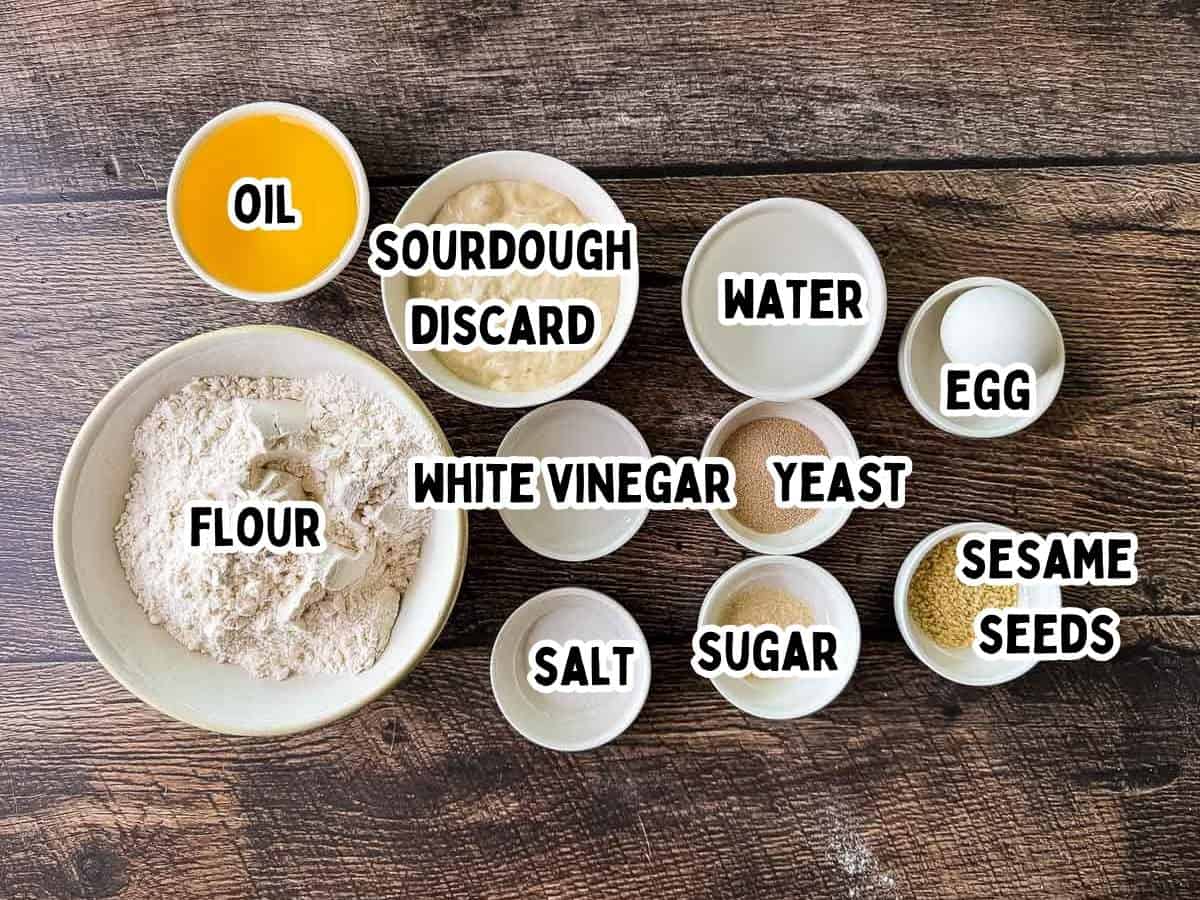
- Sourdough Discard. Unfed discard straight from the fridge works perfectly. It adds flavor and creates a soft, tender crumb.
- Active Dry Yeast. Since sourdough discard alone won't quickly leaven the dough, active dry yeast provides a reliable rise. Use lukewarm water (90°F) so the yeast activates properly.
- Sugar. A little sugar feeds the yeast and adds subtle sweetness that balances the sourdough tang. Granulated sugar, coconut sugar, honey, or maple syrup can also be used.
- Oil. Oil keeps the buns soft and tender. I prefer avocado or vegetable oil.
- White Vinegar. Just one tablespoon helps relax the gluten, giving you softer, fluffier buns.
- All-Purpose Flour. You'll need approximately 8-9 cups (roughly 1,000-1,125g), depending on the hydration of your discard and the humidity in your kitchen. I use all-purpose rather than bread flour here on purpose - with this much sourdough discard already in the dough, the extra protein and chew of bread flour isn't necessary, and AP flour keeps the crumb tender rather than pillowy-and-chewy like a bread-flour bun. Add the final cups gradually to avoid dry dough.
- Egg Wash and Sesame Seeds. Optional, but highly recommended for glossy bakery-style buns.
How to Make Sourdough Discard Hamburger Buns
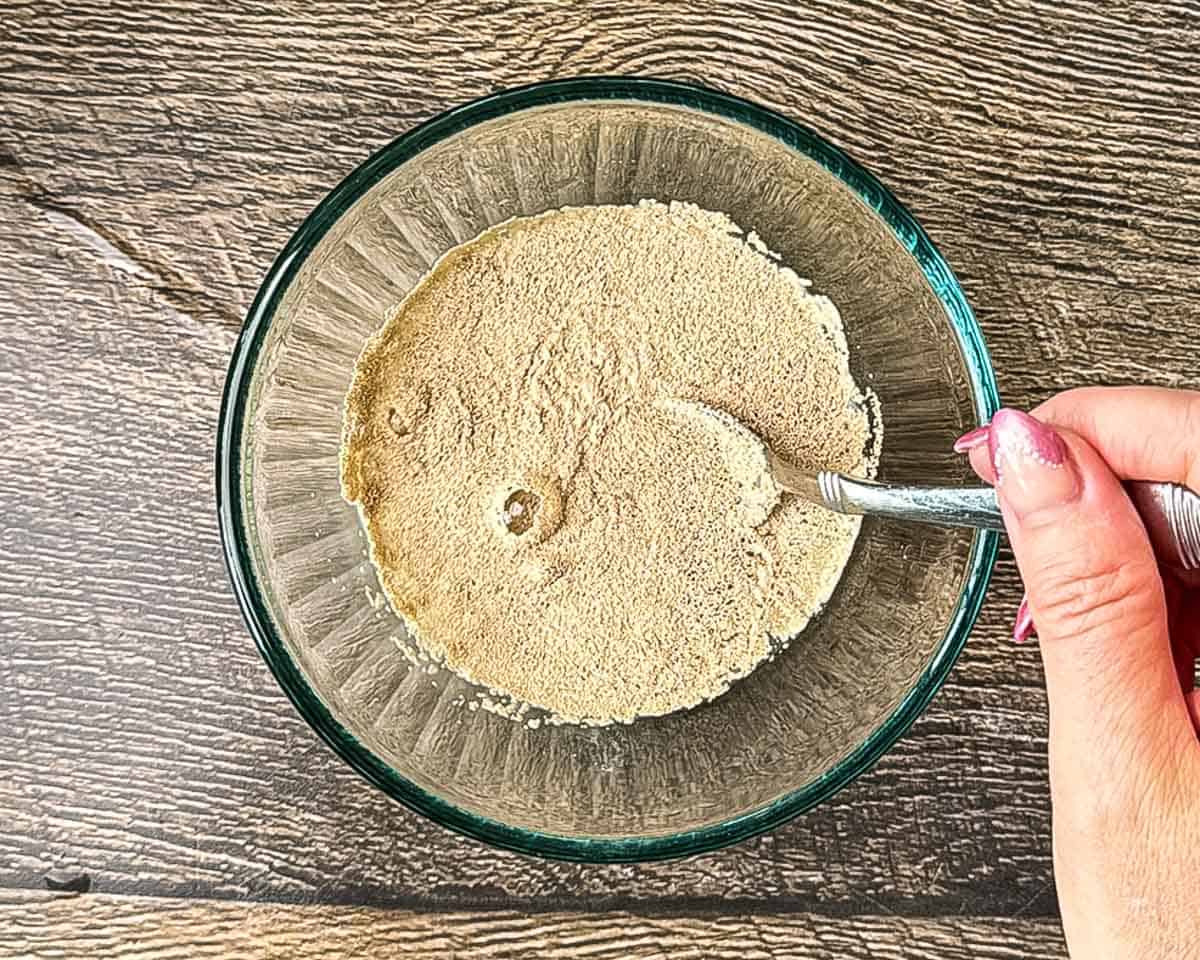
Activate the Yeast. Combine the lukewarm water, active dry yeast, and 1 teaspoon sugar in a small bowl. Let stand for 5-10 minutes until foamy. If the yeast doesn't foam, start over with fresh yeast.
Make the Dough. In a large mixing bowl, stir together the warm water (about 90°F), salt, and remaining sugar until dissolved. Add the additional warm water, sourdough discard, oil, vinegar, and prepared yeast mixture, then mix. Add 3 cups of flour and mix well. Continue adding flour gradually until a soft, slightly sticky dough forms.
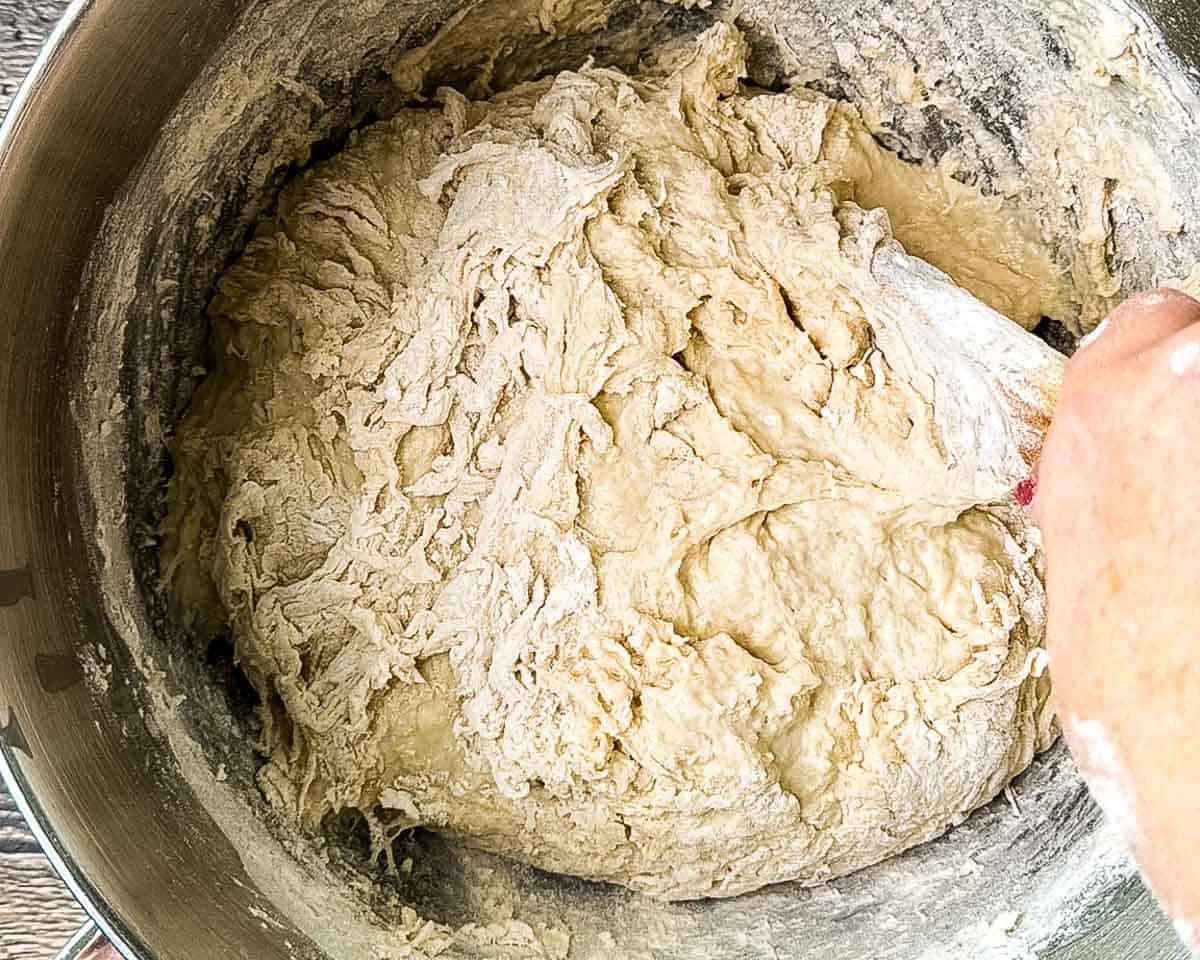
Knead. Knead by hand for 8-10 minutes or in a stand mixer fitted with a dough hook for 5-6 minutes until smooth and elastic.
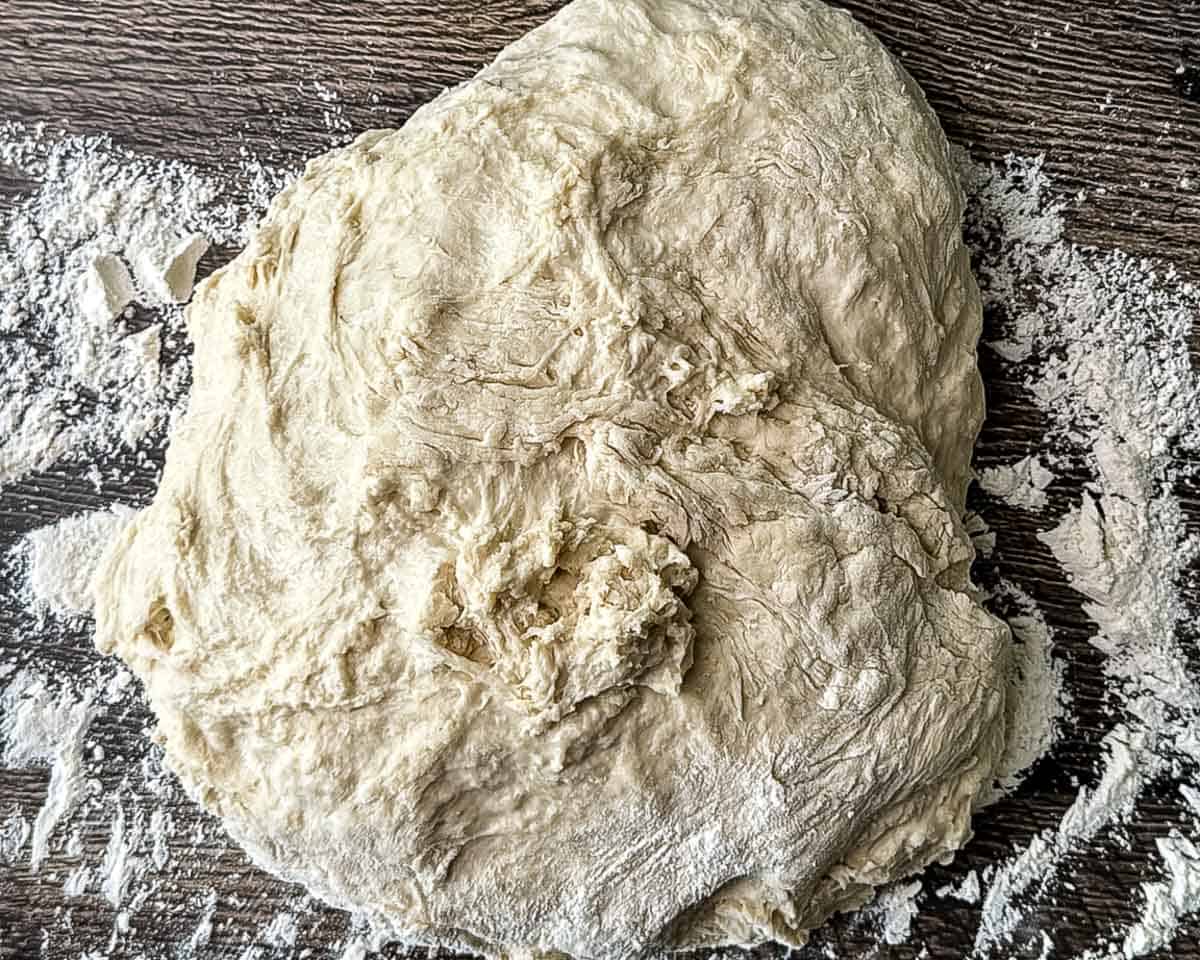
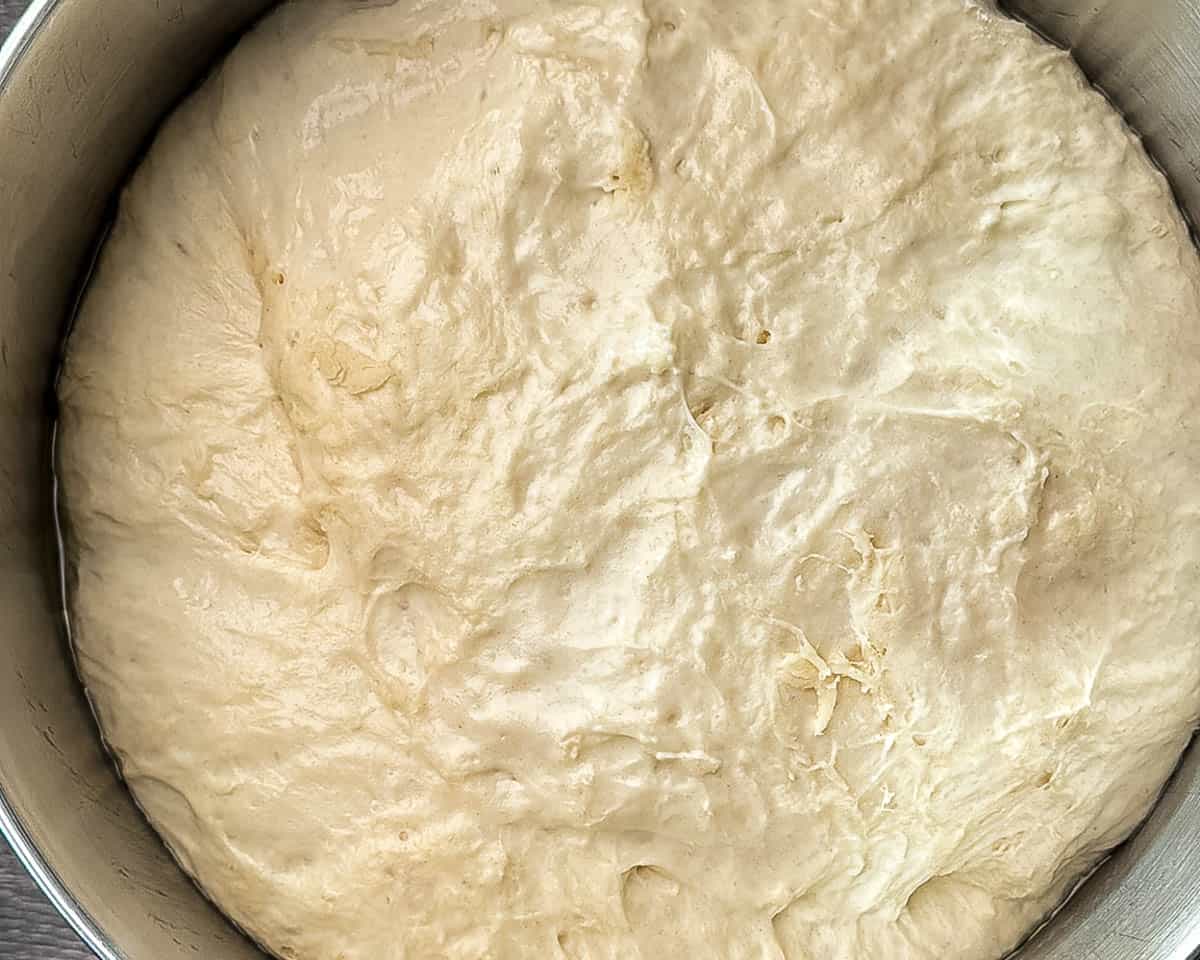
First Rise. Transfer the dough to a lightly greased bowl, cover, and let rise in a warm place for about 1 hour or until doubled.
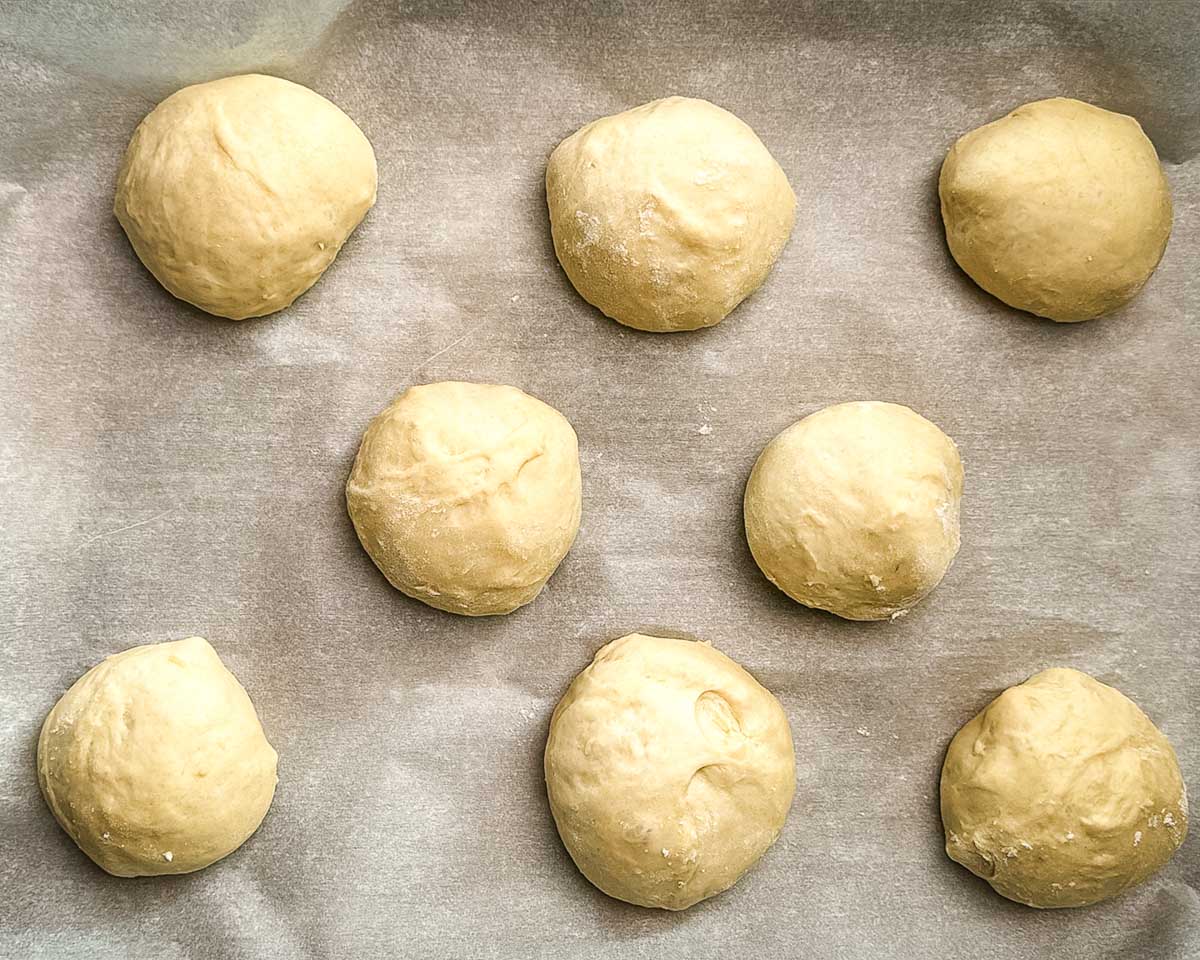
Shape the Buns. Pull a handful of dough and cut it free with a paring knife, then weigh it on a kitchen scale:
- For large buns, aim for about 95-100 grams per piece.
- For medium buns, aim for a slightly smaller portion.
To shape each piece of dough into a smooth ball, pull the dough tight underneath itself, pinching the seam closed at the bottom, then turn the ball while holding the bottom seam in place until the top is smooth and taut.
Place dough balls on parchment-lined baking sheets, spacing them a couple of inches apart.
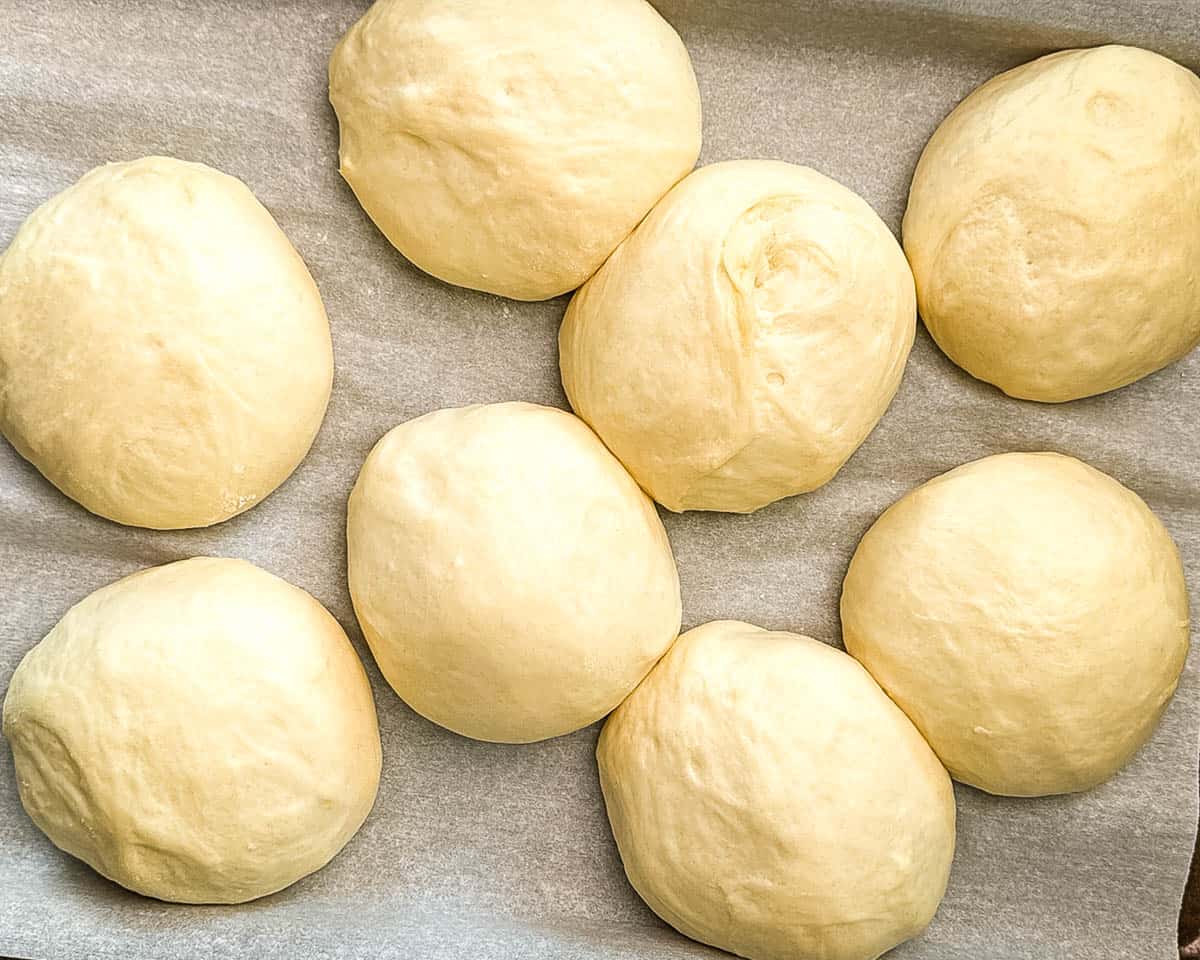
Second Rise. Cover loosely and let rise for 45-60 minutes, until noticeably puffy. Don't let them go longer than an hour - beyond that, the buns tend to spread out and go flat instead of staying domed.
Egg Wash and Bake. Preheat oven to 375°F. Brush the tops with the egg wash and sprinkle with sesame seeds if desired. Bake for 12-15 minutes, rotating the pans halfway through baking, until golden brown and the internal temperature reaches 190-195°F. Cool completely on a wire rack before slicing.
Jeri's Tips for the Best Sourdough Hamburger Buns
- Add flour gradually. The amount needed can vary throughout the year. I usually need closer to 9 cups during summer and 8 cups during our dry winters.
- Use a kitchen scale for evenly sized buns.
- Watch the clock on the second rise - over an hour and the buns go flat instead of staying domed.
- If your kitchen is cool, let the dough rise in the oven with just the oven light turned on.
Ways to Use These Sourdough Burger Buns
I almost never buy hamburger buns anymore because these work for so many meals. They're perfect for:
- Smoked Pellet Grill Burgers
- Electric Smoker Hamburgers
- Smash Burgers with Smash Burger Sauce
- Venison Smash Burgers
- Dutch Oven Pulled Pork Sandwiches
- Sloppy Joes
- Crispy Chicken Sandwiches
- Breakfast sandwiches with Air Fryer Bacon, eggs, sausage, or ham and this Chipotle Mayonnaise Recipe
Storage and Freezing
Store cooled buns in an airtight container or Ziploc bag at room temperature for 2-3 days.
For longer storage, freeze in freezer bags for up to 3 months. Thaw at room temperature or warm directly from frozen in a toaster oven.
I often make a full batch specifically to freeze extras for busy weeknights.
FAQs
Yes. Active starter can be substituted in equal amounts, though the dough may rise slightly faster.
Your water may have been too hot or too cold, or your yeast may be expired.
Absolutely. Divide the dough into smaller portions and reduce the bake time slightly.
Yes. After shaping the buns, refrigerate overnight. Let them sit at room temperature for 30-60 minutes before baking.
Yes. Freeze shaped buns after the first rise. Thaw overnight in the refrigerator, let them become puffy, then bake as directed.
More Sourdough Recipes to Try Next
If these buns went fast, here are a few more sourdough recipes worth baking next:
Printable Recipe

Sourdough Discard Hamburger Buns
Ingredients
Yeast Mixture
- ½ cup lukewarm water (90℉)
- 1 tablespoon active dry yeast
- 1 teaspoon sugar
For the Dough
- 1½ cups hot water
- 2 teaspoons salt
- ½ cup sugar
- 1 cup warm water
- ¾ cup sourdough discard
- ½ cup oil
- 1 tablespoon white vinegar
- 8-9 cups all-purpose flour
Optional:
- 1 large egg + 1 tablespoon water, for egg wash
- 1 tablespoon sesame seeds
Instructions
- Activate the yeast. Combine the lukewarm water, yeast, and 1 teaspoon sugar in a small bowl. Let stand for 5-10 minutes until foamy. If it doesn't foam, your water may have been too hot or too cold, or your yeast may be expired - start over with fresh yeast.
- Make the dough. In a large mixing bowl, add the hot water. Stir in the salt and ½ cup of sugar until dissolved. Add the warm water, sourdough discard, oil, and vinegar, and stir. Add the prepared yeast mixture and stir until combined. Add 3 cups of flour and mix well. Gradually add the remaining flour, 1 cup at a time, until a soft, slightly sticky dough forms - it should start to pull away from the sides of the bowl but will still feel a little tacky to the touch. Depending on your sourdough discard and the humidity in your kitchen, you may need between 8 and 9 cups of flour total.
- Knead. Turn the dough out onto a lightly floured surface and knead by hand for 8-10 minutes, or use a stand mixer fitted with a dough hook for 5-6 minutes, until the dough is smooth, elastic, and only slightly tacky. Dust your hands and the surface with a little extra flour as needed to keep the dough from sticking - you shouldn't need much.
- First rise. Transfer the dough to a lightly greased bowl, turning once to coat the top with oil (this keeps a skin from forming). Cover and let rise in a warm place for about 1 hour, or until doubled in size.
- Shape the buns. Pull a handful of dough and cut it free with a paring knife, then weigh it on a kitchen scale - about 95-100 grams per piece for large buns, or a slightly smaller portion for medium buns. To shape, pull the dough tight underneath itself, pinching the seam closed at the bottom, then turn the ball while holding the bottom seam in place until the top is smooth and taut. Place the shaped buns on parchment-lined baking sheets, leaving about 2-3 inches between each one to allow for spreading.
- Second rise. Cover loosely with a clean kitchen towel and let rise for 45-60 minutes, until noticeably puffy and almost doubled - the buns should feel light and airy when gently touched, not dense. Watch the clock here: don't let them rise longer than an hour, or they'll spread out and go flat instead of staying domed.
- Egg wash. Preheat your oven to 375°F. Whisk together the egg and 1 tablespoon water. Brush the tops gently with the egg wash and sprinkle with sesame seeds, if using.
- Bake. Bake for 12-15 minutes, rotating the baking sheets halfway through, until the buns are golden brown and the internal temperature reaches 190-195°F.
- Cool. Transfer to a wire rack and cool completely before slicing.
Save This Recipe 💌
Notes
- Flour. Add the final cups gradually - the amount needed varies with your discard's hydration and your kitchen's humidity.
- Rise time. Keep the second rise to an hour or less. Going longer causes the buns to spread and go flat instead of holding a dome shape.
- Storage. Store cooled buns at room temperature for 2-3 days, or freeze for up to 3 months.
Nutrition
The provided nutrition information is automatically calculated. Accuracy is not guaranteed.
If you have more discard to use up, you'll also love my collection of sourdough discard recipes, including sourdough discard chocolate chip cookies and sourdough discard waffles.
Did you love this recipe?
Then please leave a 5-star rating and/or review below! You can also save it! Just tap the heart symbol ❤️ in the lower right corner of your screen, and the recipe will be stored in your own recipe box!📥

Corinna says
Thank you for sharing this recipe!! I just finished making these so they haven't been used for hamburgers yet, but they are lovely. I tried one to get an idea of the texture inside and they have a light texture and good, slightly sweet taste. They're also not dry at all, as promised. I followed the recipe exactly even though it required more bowls and steps than I normally use, but I'm so glad I did. The method is a good one and they turned out perfectly! Since my kitchen is quite humid during the summer, I wound up needing closer to 9 cups of flour and a little more on the bench, so the recipe made 24 buns that weigh about 105 grams each. I fit 12 on each of two baking sheets and they fit without touching. The finished product would work well for 1/4 to 1/2 lb burgers. Also, I only needed 45 minutes for the second rise time until they were nice and puffy. My new go-to recipe! I plan on using these for hot ham and cheese sandwiches and whatever else I can think of. Great!!!
Jeri Walker says
Thank you so much for such a detailed review, Corinna! I'm thrilled that you're so happy with the recipe! 😊 And thank you for sharing your adjustments for a humid kitchen! That will be really helpful for other readers. Hot ham and cheese sandwiches sound like a fantastic way to use them too! I'm so glad this recipe has earned a spot as your new go-to!