

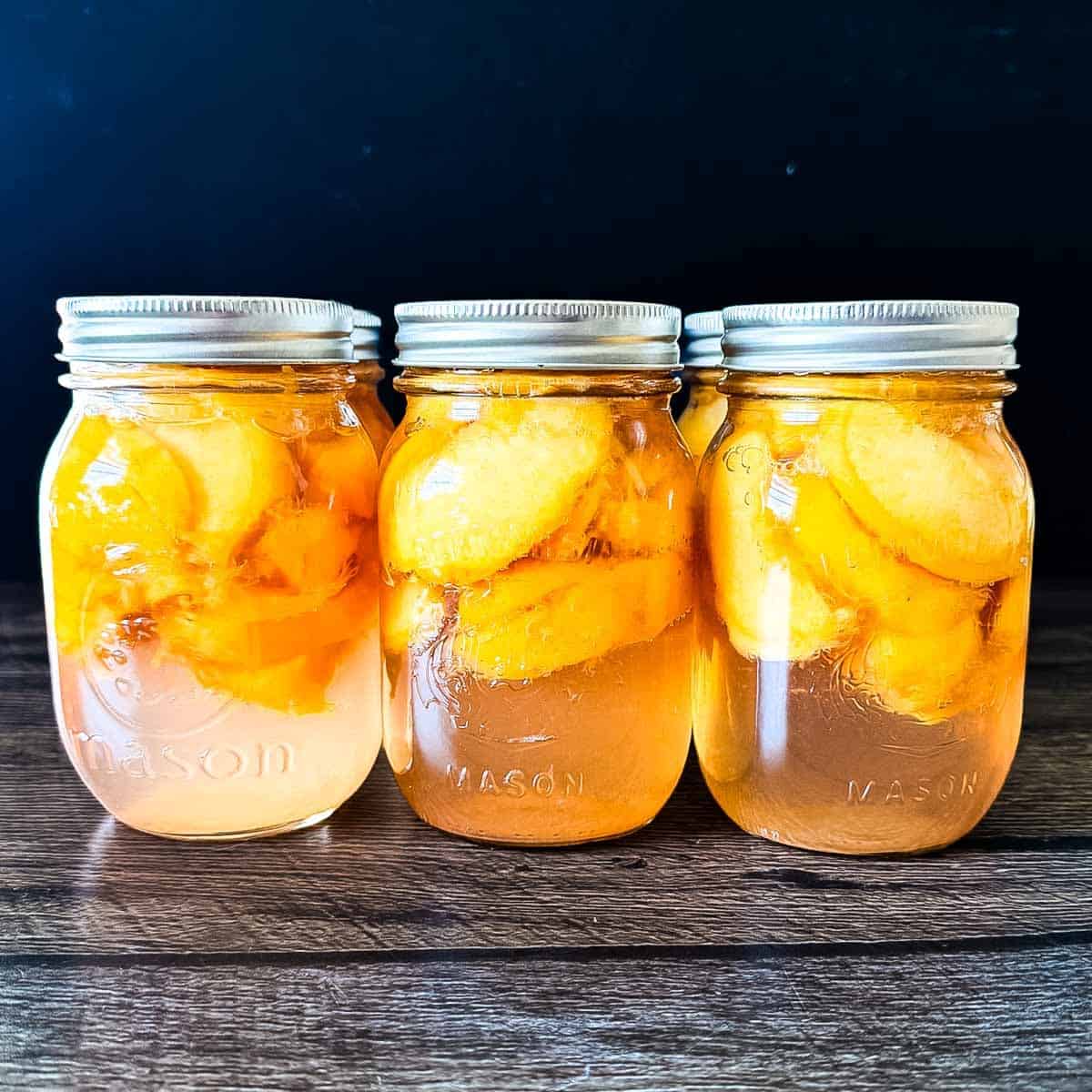
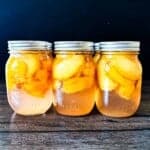
Small-batch canned peaches have become my go-to every summer when I want a few jars of summer peaches on the shelf without needing a whole bushel of fruit. If you're new to canning peaches, this recipe makes about 7 pint jars and includes both raw pack and hot pack methods.
I raw-pack mine. In my testing, raw-packed peaches stay firmer in the jar since they skip the extra pre-cooking. Both methods are below, with four syrup options and processing times for every elevation.
Want to save this recipe?
Enter your email & I'll send it to your inbox. Plus, get great new recipes from me every week!

Why You'll Love This Small-Batch Canned Peaches Recipe
- Small batch: Makes about 7 pints, so you don't need a mountain of peaches.
- Two packing methods: I've included both raw pack and hot pack instructions.
- Choose your sweetness: Use very light, light, medium, or heavy syrup.
- Beginner friendly: Everything is processed in a boiling water bath - no pressure canner needed.
For more small-batch canning recipes, try my small batch bread and butter pickles, canned applesauce, small batch canned cowboy candy, and peach jam without pectin.
Recipe at a Glance
- Yield: About 7 pint (500 mL) jars, or 3-4 quart jars
- Prep Time: 45 minutes
- Processing Time: 20-45 minutes, depending on pack method, jar size, and elevation (see tables below)
- Total Time: About 1 hour 10 minutes at sea level
- Method: Boiling water bath, raw pack or hot pack
Canning Safety Notes
A few things in this recipe are not optional, so I'm putting them up front instead of burying them in the notes:
- Use yellow-flesh peaches only. Don't substitute white-flesh peaches. Some white-flesh varieties have a naturally higher pH, which puts them outside the acidity range for this tested method. Freestone peaches are easiest to work with because the pits come out cleanly, but you can also can yellow clingstone peaches.
- Use the processing time for your elevation. Under-processing is a real risk, not a formality.
- Pints or quarts both work, but they need different processing times. Use the chart that matches your jar size below.
Beyond those safety requirements, you can choose your syrup strength, cut the peaches into halves, quarters, or slices, and use either the raw-pack or hot-pack method.
Raw Pack vs. Hot Pack: Which Is Better?
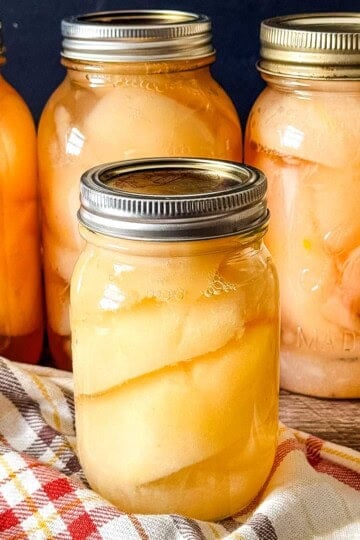
Raw pack means the peaches go into the jars uncooked. In my batches, raw-packed peaches have stayed firmer because they skip the additional pre-cooking step. The tradeoff is that they tend to float more in the jars.
Hot pack removes more air from the fruit before it's jarred, so more peaches fit per jar and they float less.
My preference is raw pack because I like the firmer texture, and I don't mind a little fruit floating in the jars. If appearance and fitting more peaches into each jar matter more to you, hot pack is the better choice.
Ingredients You'll Need
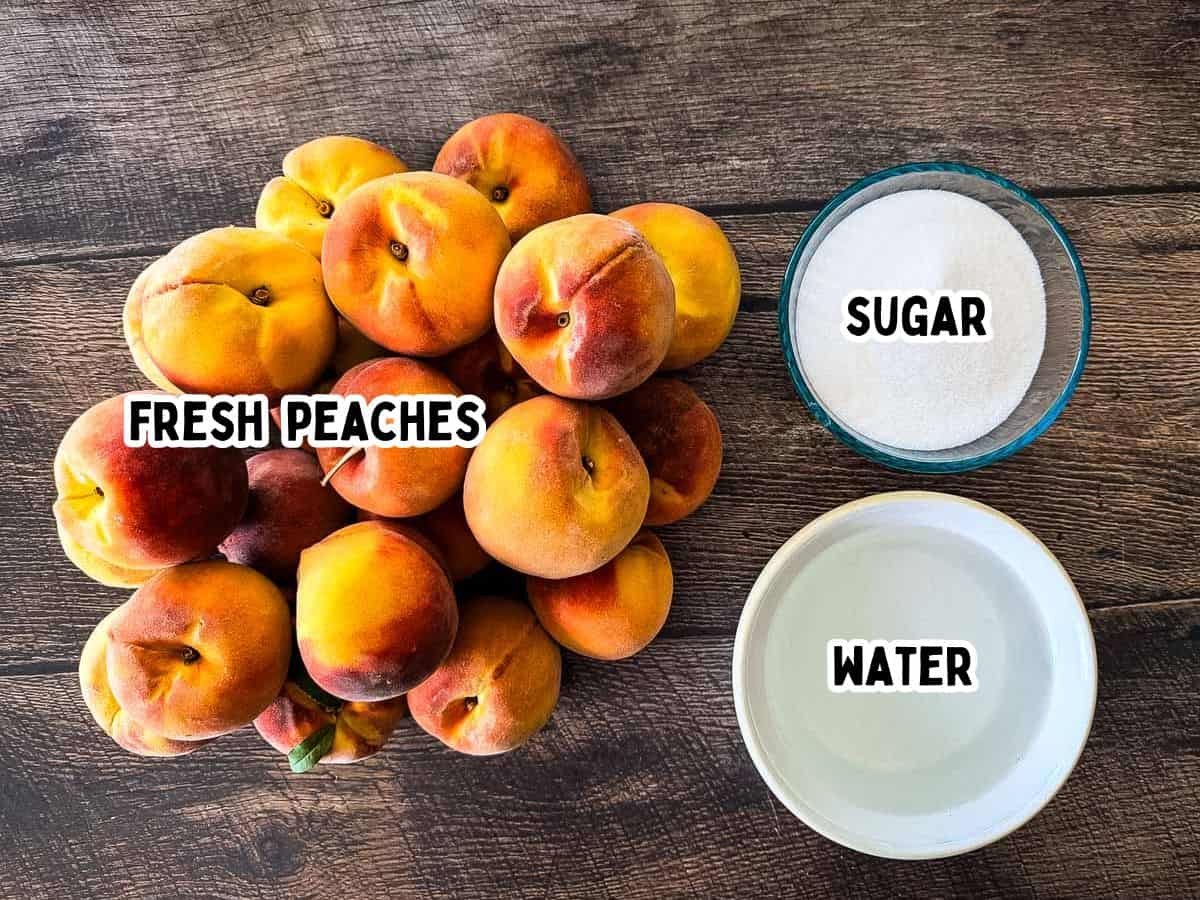
- Yellow peaches, ripe but still firm. Soft, overripe peaches turn mushy during processing.
- Sugar and water make the canning syrup. Sugar is a taste choice, from very light to heavy (see the table below). It affects flavor and texture, not whether the peaches are safe to can.
See the recipe card below for the full ingredient list and exact amounts.
How Many Peaches Do You Need?
For 7 pint jars, start with about 5½ pounds of whole peaches. After peeling and removing the pits, you'll have roughly 3⅔ pounds of prepared fruit.
Peach size varies so much that I recommend weighing them instead of counting them. Smaller peaches are also easier to fit into pint jars, especially if you want to can halves rather than slices.
How to Prepare the Peaches for Canning
Get your canner ready. Fill a boiling water bath canner about halfway with water and start heating it. Wash 7 pint jars in hot water with dish soap, and keep them hot until you're ready to fill them. Prepare your lids and bands according to the package directions.
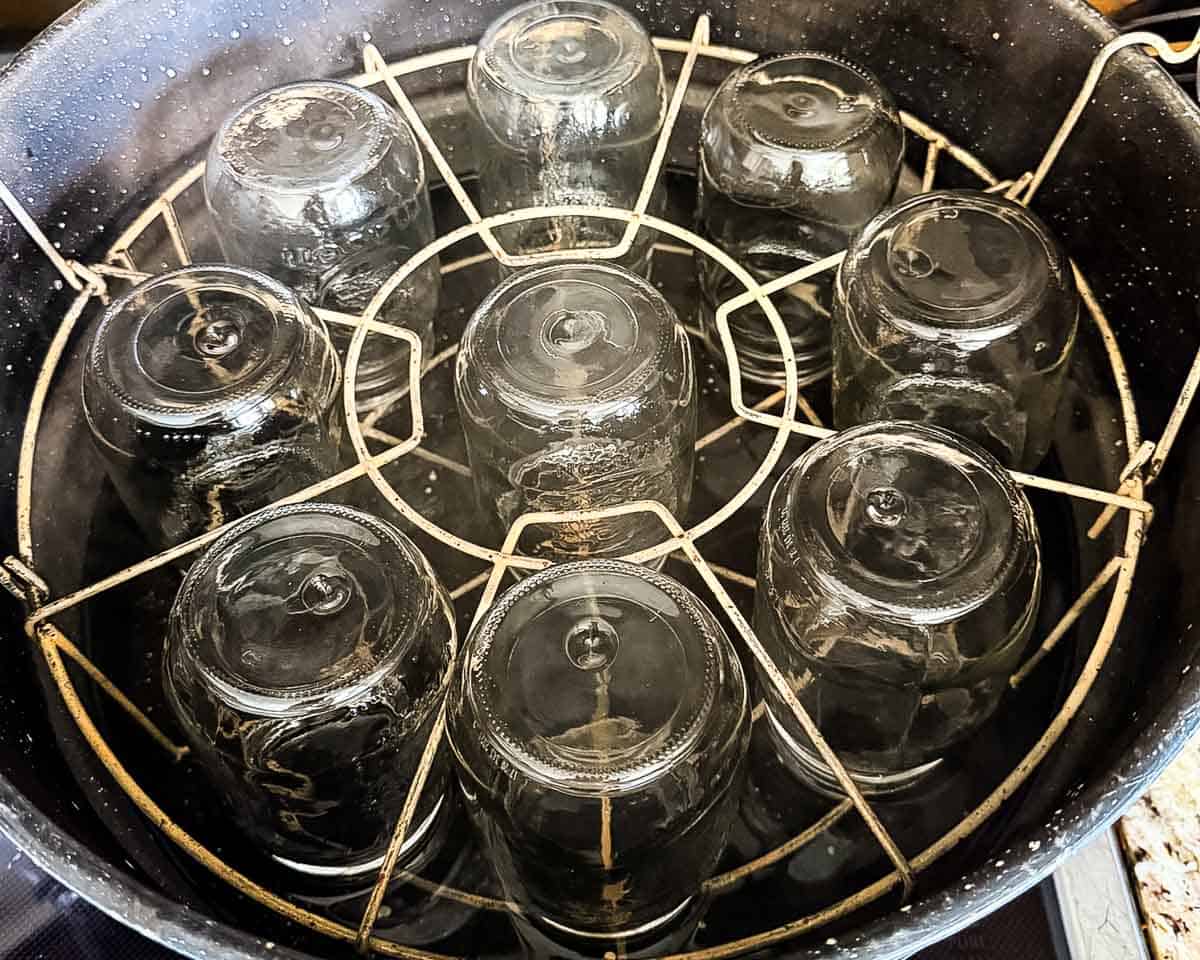
Mix an anti-browning solution. Prepare an ascorbic acid or Fruit-Fresh solution per the package directions, or combine ¼ cup bottled lemon juice with 4 cups of cold water in a large bowl. Set it aside before you start peeling.
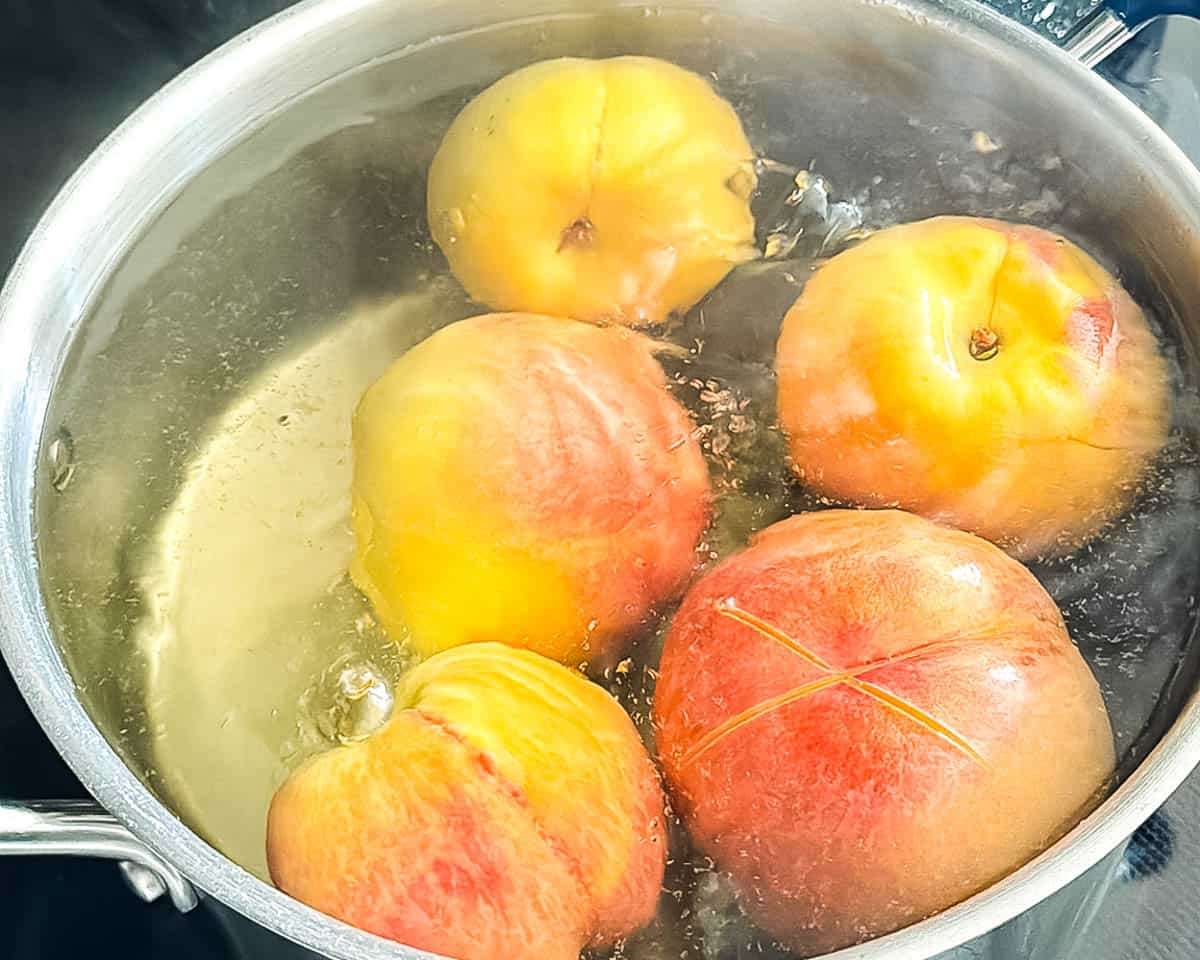
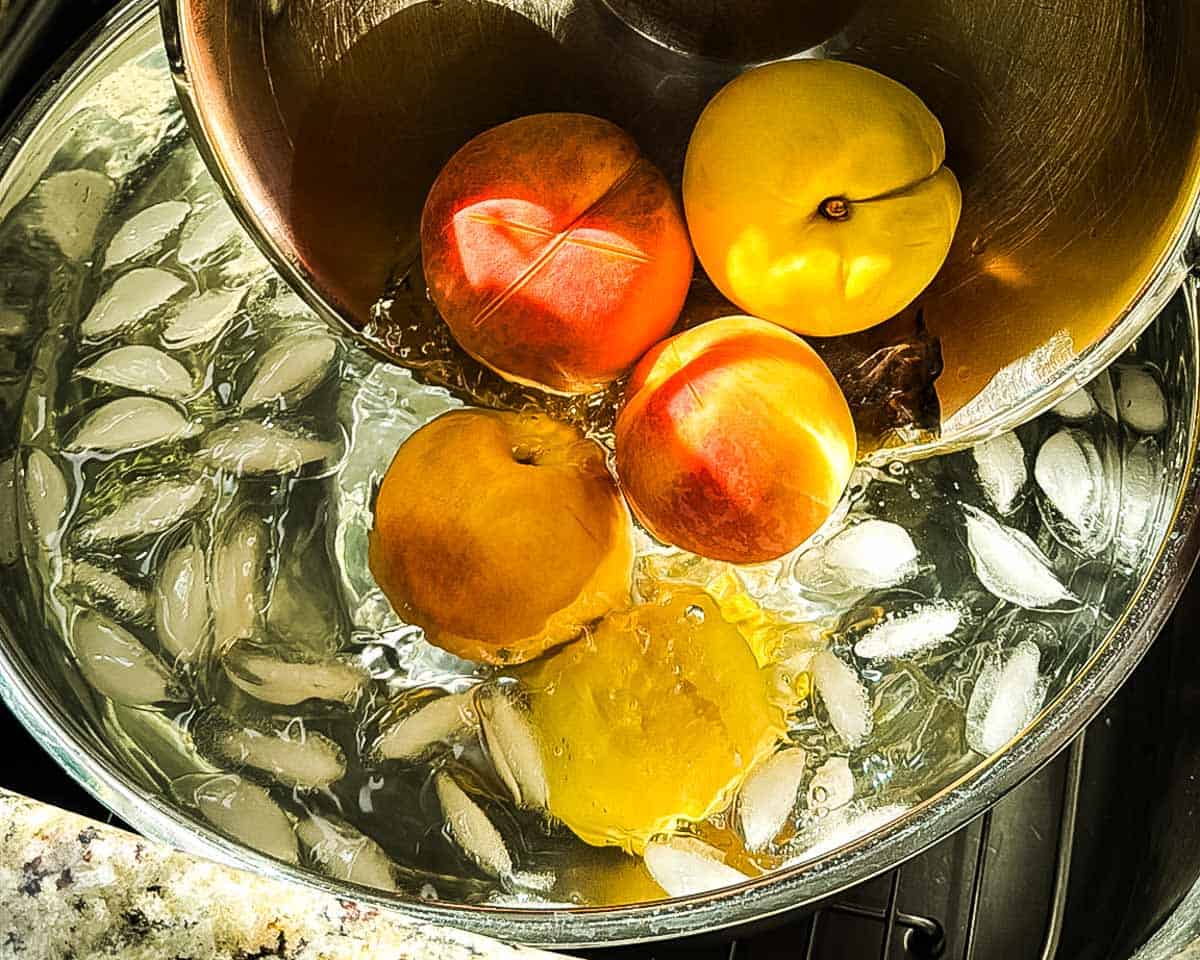
Blanch and peel the peaches. Bring a large pot of water to a boil and fill a separate bowl with ice water. Working in small batches, lower the peaches into the boiling water for 30-60 seconds, just until the skins start to loosen, then lift them out with a slotted spoon and move them straight to the ice water. Don't blanch longer than that or they'll start to cook. Once cool, the skins should slip right off.
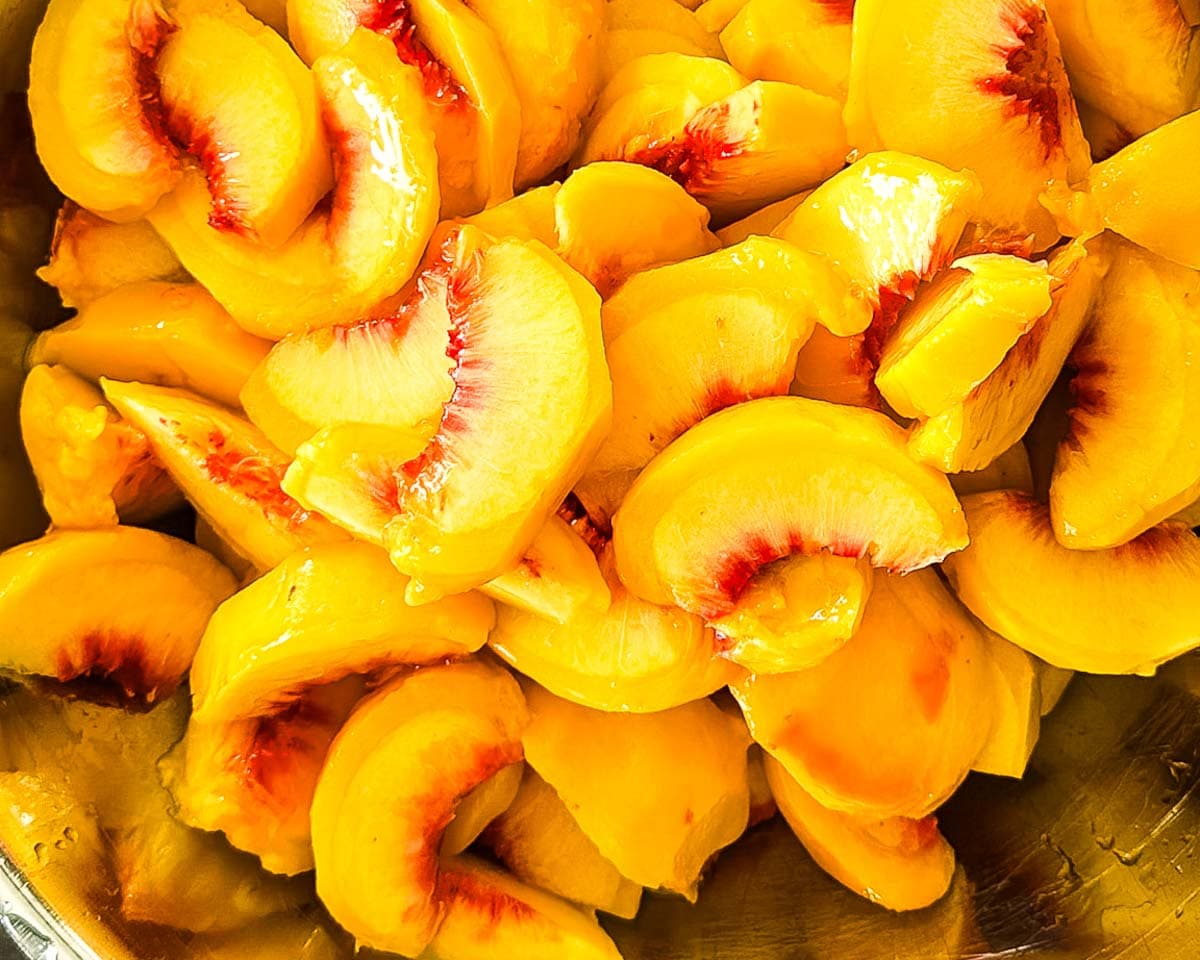
Pit and cut. Halve the peaches and remove the pits, then leave them in halves, cut them into quarters, or slice them. Halves look nice on the shelf, quarters pack in more easily, and sliced peaches are the most convenient if you're using them for breakfast or dessert later. Drop the cut peaches into your anti-browning solution as you go, so they're not sitting out while you finish the rest.
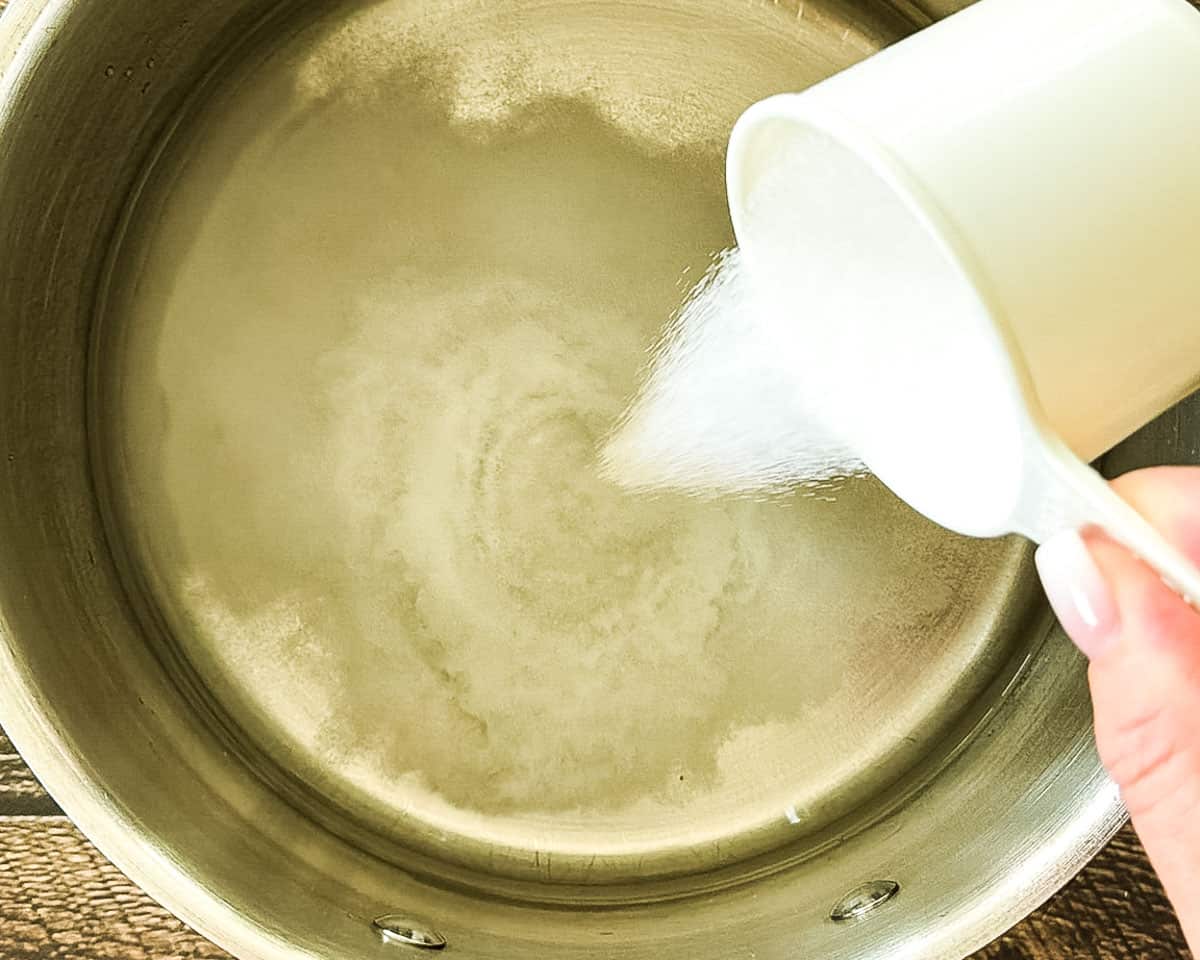
Make your syrup. Combine the sugar and water for your chosen syrup strength in a large saucepan. Bring to a boil over medium-high heat, stirring until the sugar dissolves, then keep it hot while you pack the jars.
Choosing Your Syrup
| Syrup | Water | Sugar | Approx. Yield |
| Very Light | 6½ cups | ¾ cup | 6¾ cups |
| Light (my preference) | 5¼ cups | 2¼ cups | 6½ cups |
| Medium | 5 cups | 3¼ cups | 7 cups |
| Heavy | 5 cups | 4¼ cups | 7¼ cups |
The syrup is your packing liquid, and it's really just a simple syrup measured out for canning. Very light syrup adds just a touch of sweetness. Light syrup, my usual choice, adds enough sweetness to complement the peaches without covering up their fresh peach flavor. Medium syrup works well too if you like noticeably sweeter canned peaches, and heavy syrup gets you an old-fashioned, dessert-style peach.
How to Can Peaches in a Water Bath Canner
Raw Pack (My Preferred Method)
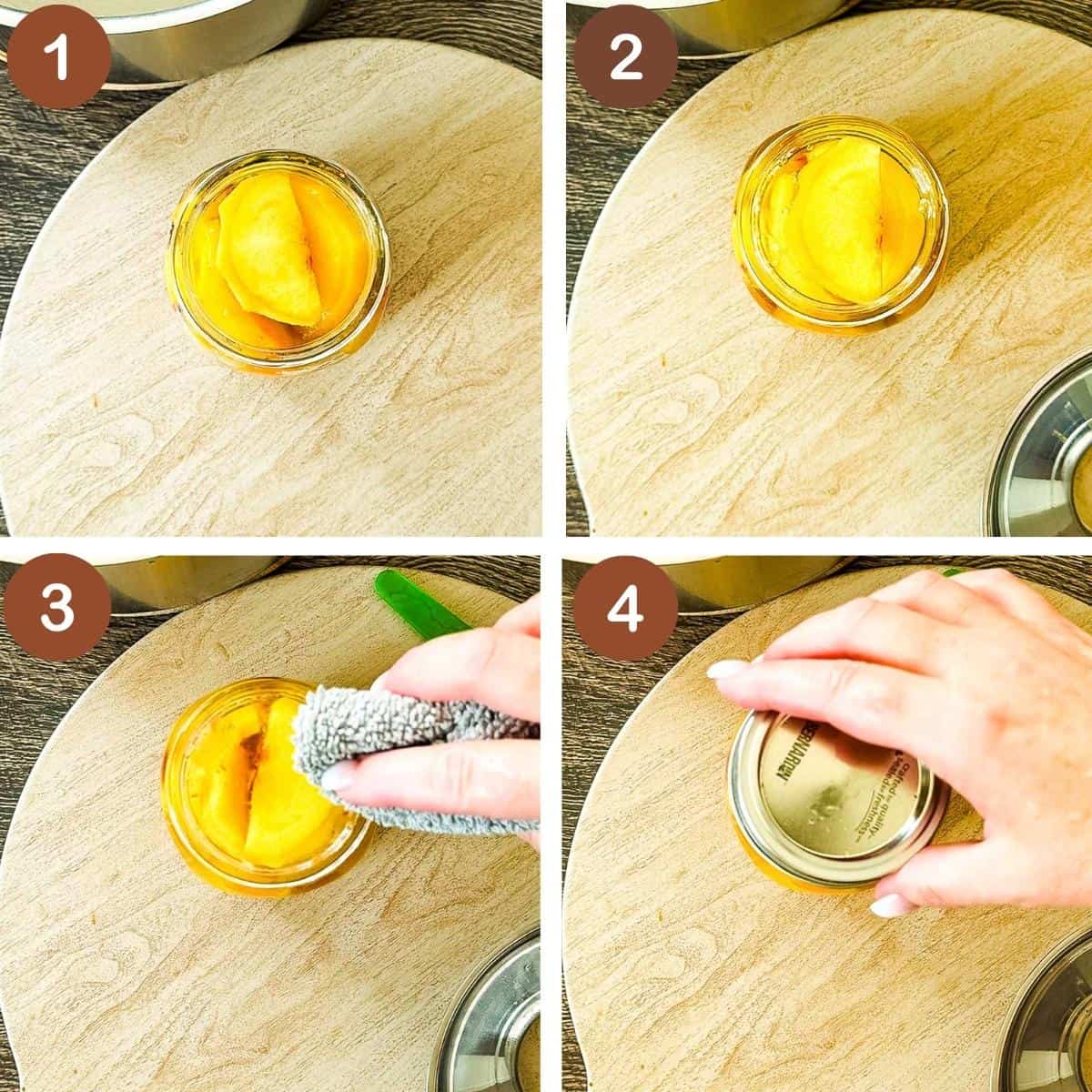
Drain the prepared peaches well. Pack the uncooked peaches firmly into hot pint jars, arranging them as tightly as you can without crushing the fruit.
Ladle the boiling syrup over the peaches, leaving ½ inch of headspace. Run a bubble remover or other nonmetallic utensil around the inside of the jar to release trapped air, then add more hot syrup if needed to maintain that ½-inch headspace.
Wipe the rims clean, center the lids, and screw the bands on until fingertip tight. Place the filled jars in the water bath canner.
Hot Pack
Drain the prepared peaches. Add the peaches to a large saucepan with enough syrup to cover them, and bring to a boil.
Pack the hot peaches into hot pint jars and ladle hot syrup over them, leaving ½ inch of headspace.
Remove air bubbles and top up with hot syrup as needed to maintain ½-inch headspace.
Wipe the rims clean, center the lids, and screw the bands on until fingertip tight. Place the filled jars in the water bath canner.
Processing the Jars
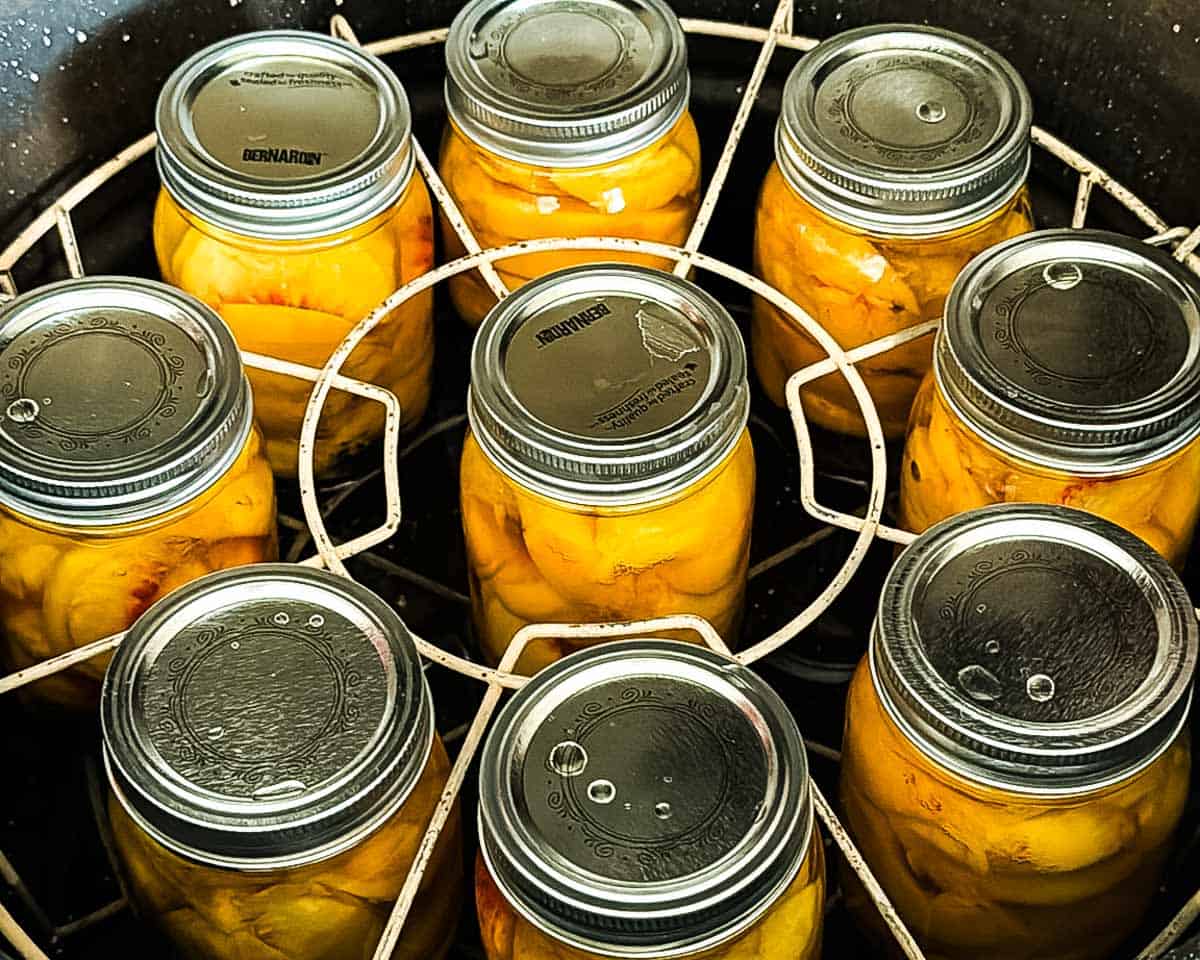
Make sure the jars are covered by at least 1 inch of water. Cover the canner, bring it to a full rolling boil, and start timing once it reaches a full boil. Keep the water boiling the entire time. Quarts need a longer processing time than pints, so use the chart that matches your jar size.
The processing times below are based on the tested National Center for Home Food Preservation method for yellow-flesh peaches.
Raw Pack
| Elevation | Pints | Quarts |
| 0-1,000 feet | 25 minutes | 30 minutes |
| 1,001-3,000 feet | 30 minutes | 35 minutes |
| 3,001-6,000 feet | 35 minutes | 40 minutes |
| Above 6,000 feet | 40 minutes | 45 minutes |
Hot Pack
| Elevation | Pints | Quarts |
| 0-1,000 feet | 20 minutes | 25 minutes |
| 1,001-3,000 feet | 25 minutes | 30 minutes |
| 3,001-6,000 feet | 30 minutes | 35 minutes |
| Above 6,000 feet | 35 minutes | 40 minutes |
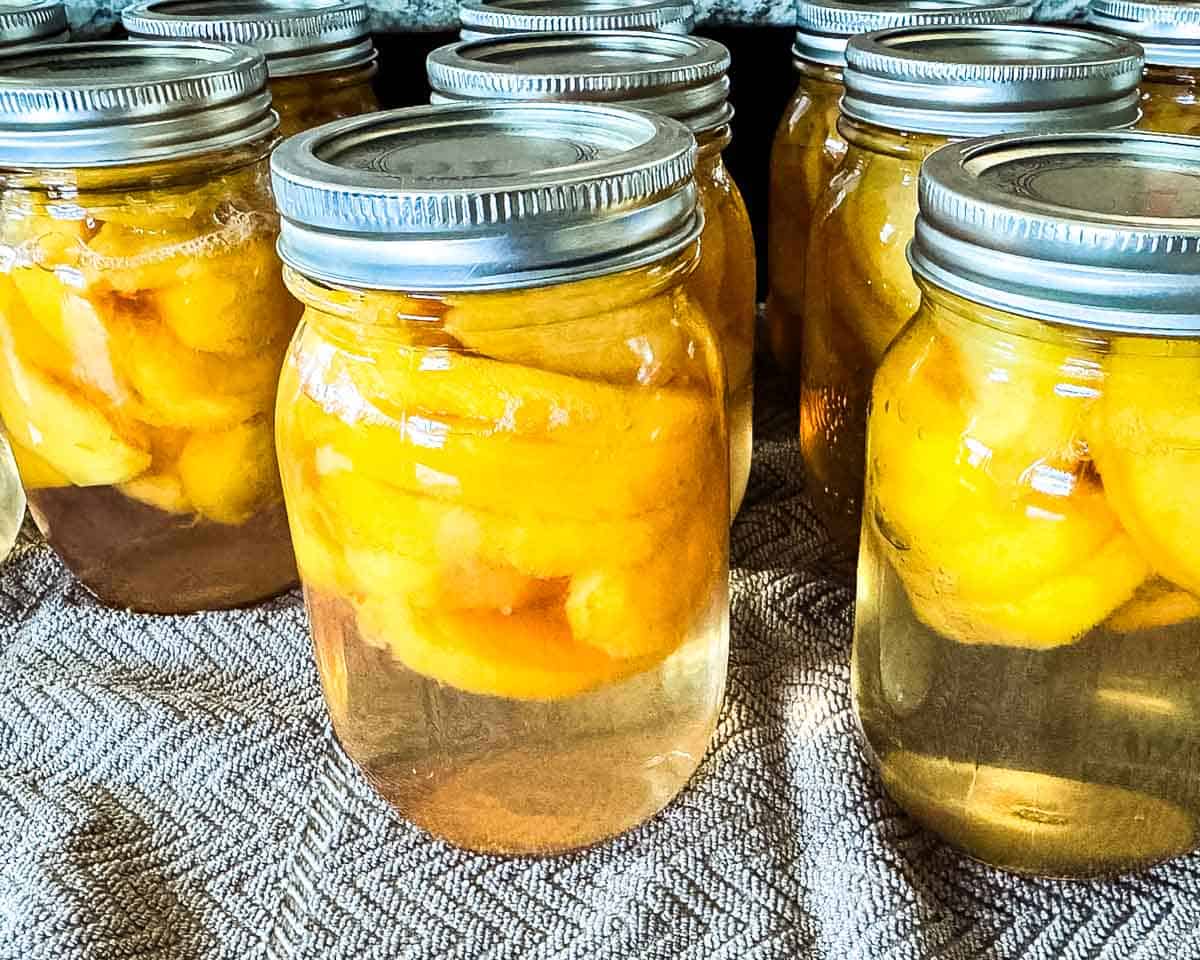
When the processing time is up, turn off the heat and remove the canner lid. Wait 5 minutes, then use a jar lifter to remove the jars straight up without tilting them. Set them upright on a towel or cooling rack with space between each jar.
Leave them undisturbed for 12-24 hours, then check the seals. Remove the screw bands, wash and dry if needed, label them, and store in a cool, dark place. Refrigerate and use first any that didn't seal.
Jeri's Top Tips
- Peel in small batches. Working with just a few peaches at a time keeps the blanch water hot and means nothing sits too long before you're ready to cut it.
- Smaller peaches pack easier. Large peaches work fine, but quarters or slices fit more easily than halves.
- Don't skip the ice water. Moving the peaches straight from boiling water into ice water stops the cooking immediately, so they don't start to soften before they're even in a jar.
- Keep your syrup hot. Pouring hot syrup into hot jars helps prevent thermal shock and keeps everything at the proper temperature going into the canner.
Substitutions & Variations
- Syrup strength: Pick very light, light, medium, or heavy based on how sweet you want the finished peaches.
- No added sugar: Yellow peaches can also be canned in water, apple juice, or white grape juice using this same processing method. It's a tested option if you're avoiding added sugar, though the color and texture won't hold quite as well.
- Cut style: Halves, quarters, or slices all work. Pick based on how you plan to use the peaches later, or what fits best.
- Anti-browning solution: Ascorbic acid, Fruit-Fresh, or a lemon juice and water soak all work. This step is for color, not safety, so skip it if a little browning doesn't bother you.
Storage
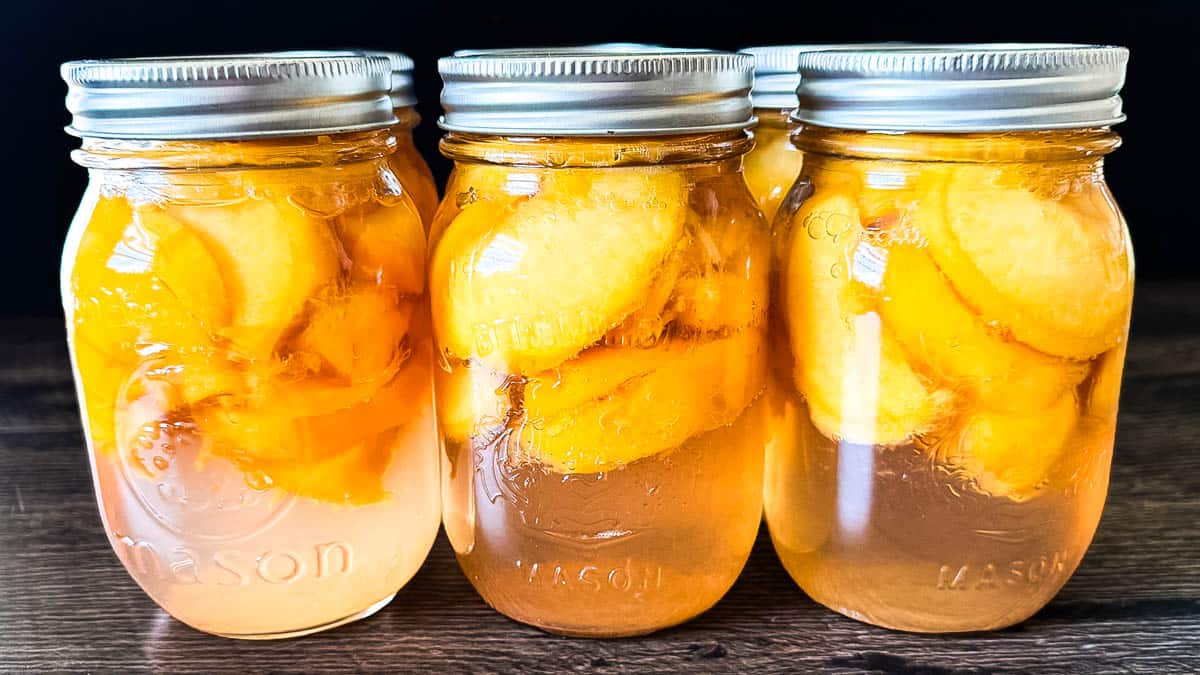
Properly sealed jars can be stored in a cool, dark, dry place. For the best quality, use them within one year. Refrigerate any jars that don't seal and use them first.
What to Make with Canned Peaches
FAQs
No. This recipe is based on tested canning recommendations for yellow-flesh peaches. White-flesh peaches can have a higher pH, so they should not be substituted in this boiling water bath canning recipe.
No. Unlike tomatoes, yellow peaches don't require bottled lemon juice or citric acid in each jar for this tested canning method. The lemon juice and water mixture I use during prep is simply an optional anti-browning treatment.
Some floating is normal with raw-packed peaches because uncooked fruit contains more air. Hot packing removes more air from the peaches, which helps reduce floating and lets you fit more fruit into each jar.
No. Use the full processing time listed for your jar size, packing method, and elevation. Processing time is part of the tested canning method and shouldn't be shortened.
The tested NCHFP directions call for peeling the peaches before canning. Blanching them for 30-60 seconds and immediately transferring them to ice water makes the skins much easier to remove.
No. Fill and process the jars as you go rather than filling them and leaving them sealed on the counter while you wait for the canner. If you're working in batches, keep the remaining prepared peaches in the anti-browning solution and the syrup hot, then fill the next batch of hot jars when the canner is ready.
Printable Recipe
Small Batch Canned Peaches (Raw Pack or Hot Pack)
Ingredients
Peaches
- 5½ pounds yellow freestone peaches ripe but firm (about 3⅔ pounds after peeling and pitting)
- Ascorbic acid, Fruit-Fresh, or lemon juice and water, for preventing browning
Light Syrup (my preference) - See more syrup options below in the Notes
- 5¼ cups water
- 2¼ cups granulated sugar
Instructions
- Prepare the canner. Fill a boiling water bath canner about halfway with water and heat it. Wash 7 pint jars in hot, soapy water and keep them hot. Prepare lids and bands per the manufacturer's directions.
- Prepare a solution to prevent browning. Mix an ascorbic acid or Fruit-Fresh solution per package directions, or combine ¼ cup of bottled lemon juice with 4 cups of cold water. Set aside.
- Peel the peaches. Bring a large pot of water to a boil and fill a bowl with ice water. Blanch the peaches in small batches for 30-60 seconds, until the skins loosen, then transfer to ice water. Slip off the skins once cool.
- Pit and slice. Halve the peaches and remove the pits. Leave in halves, or cut into quarters or slices. Place immediately into the anti-browning solution.
- Make your chosen syrup. Combine the water and sugar for your preferred syrup strength in a large saucepan. Bring to a boil, stirring until the sugar dissolves. Keep hot while filling the jars.
- Do either the Raw Pack OR Hot Pack method:Raw pack: Drain the peaches and pack firmly into hot jars. Ladle boiling syrup over the peaches, leaving ½ inch headspace. Remove air bubbles, top up with syrup as needed, wipe rims, and seal.Hot pack: Drain the peaches, add to a saucepan with enough syrup to cover, and bring to a boil. Pack hot peaches into hot jars and ladle hot syrup over them, leaving ½ inch headspace. Remove air bubbles, top up with syrup as needed, wipe rims, and seal.
- Process the jars. Ensure jars are covered by at least 1 inch of water. Cover the canner with the lid and bring to a full rolling boil. At 0-1,000 feet: raw pack takes 25 minutes for pints or 30 for quarts; hot pack takes 20 minutes for pints or 25 for quarts. See the full elevation chart above for higher altitudes. Keep the water at a full boil the entire time.
- Cool and check seals. When the processing time is up, turn off the heat and remove the canner lid. Wait 5 minutes, then use a jar lifter to remove the jars straight up without tilting them. Set them upright on a towel or cooling rack with space between each jar. Leave undisturbed for 12-24 hours, then check the seals. Remove bands, label, and store. Refrigerate any unsealed jars and use first.
Want to save this recipe for later? 💌
Notes
- Very Light Syrup: 6½ cups water, ¾ cup granulated sugar
- Light Syrup: 5¼ cups water, 2¼ cups granulated sugar
- Medium Syrup: 5 cups water, 3¼ cups granulated sugar
- Heavy Syrup: 5 cups water, 4¼ cups granulated sugar
- No added sugar: Peaches may also be canned in water, apple juice, or white grape juice using the same processing times. The color and texture may not hold as well as peaches canned in sugar syrup.
- Yield: Yield will vary with peach size and how tightly the jars are packed.
- Use yellow peaches: Do not substitute white-flesh peaches. Some varieties aren't acidic enough for safe boiling water bath canning with this method.
- Choose firm, ripe peaches: Very soft or overripe peaches will soften considerably during processing.
- Cut style: Halves look nice, quarters pack easily into pint jars, and slices are convenient for later use in breakfast or dessert recipes.
- Anti-browning solution: This step is for color, not canning safety, and can be skipped if a little browning doesn't bother you.
- Raw pack vs. hot pack: Raw-packed peaches stay firmer but may float slightly. Hot packing removes more air and fits more fruit per jar.
- Sugar and safety: The sugar in the syrup affects flavor, color, and texture, not safety. Peaches can also be canned in water, apple juice, or white grape juice using this method.
- Jar size: Pints or quarts both work. Quarts need a longer processing time than pints at every elevation, so use the quart column above.
- Adjust for altitude: Always use the processing time for your elevation.
- Food safety: This recipe is based on tested recommendations from the National Center for Home Food Preservation for canning yellow peach halves or slices. Do not use white-flesh peaches or reduce the processing time for your jar size.
Nutrition
The provided nutrition information is automatically calculated. Accuracy is not guaranteed.
Did you love this recipe?
Then please leave a 5-star rating and/or review below! You can also save it! Just tap the heart symbol ❤️ in the lower right corner of your screen, and the recipe will be stored in your own recipe box!📥
Comments
No Comments