


This easy Sourdough Focaccia bakes up crispy and golden on the outside and soft, airy, and pillowy on the inside. It's topped with olive oil, sprinkled with flaky salt and herbs, and takes very little hands-on work.
While this recipe is not quite as easy as my No Knead Sourdough Bread, No Knead Whole Wheat Sourdough Bread, and No Knead Sourdough Sandwich Bread, it's close, aside from a few stretch and folds at the beginning. If you can stir dough in a bowl and pour olive oil into a pan, you can make this focaccia.

Want to save this recipe?
Enter your email & I'll send it to your inbox. Plus, get great new recipes from me every week!
Easy Sourdough Focaccia Recipe
This homemade focaccia has the same irresistible flavor and texture as bakery-style focaccia - but made in your own kitchen, with your own starter and with ingredients you already have on hand.
The best part is that it is foolproof. Just mix, stretch, rest, and bake. Once you make it once, this focaccia will become part of your regular baking rotation. Trust me - that pan goes fast.
You Don't Need Special Equipment
You really don't. A 9x13-inch baking pan, a bowl, parchment paper, and your hands are all you need. No mixer, no Dutch oven, no dough hook attachment. The focaccia does not need shaping skills. It rises in the pan and bakes in the pan. It basically lives in the pan until you eat it.
What You'll Love About This Focaccia
- Crisp, golden edges from the olive oil
- Soft, airy interior with beautiful bubbles
- Naturally fermented flavor from your sourdough starter
- Almost no hands-on time
- Perfect side for pasta, soups, salads, or snacking straight from the pan
- Great for beginners and very forgiving
My Sourdough Focaccia Schedule
This is the exact timeline I follow. Adjust to fit your schedule:
Evening Before:
- 9:00 PM - Build levain (25g starter + 75g flour + 75g water)
- Let rest at room temperature overnight
Next Day:
- 7:00 AM - Mix dough
- 7:05 AM - Cover and let rise
- 1:00 PM - Transfer to pan
- 2:00-3:00 PM - Second rise
- 3:00 PM - Dimple + toppings
- 3:20 PM - Bake
- 4:00 PM - Cool
- 4:15 PM - Slice and eat warm (or "taste test" several pieces while no one is looking)

Recipe Ingredients
- Levain (Night Before). Building the levain (or sourdough starter) ensures your dough rises high every time. You'll need mature sourdough starter, all-purpose bread flour, and warm water (90°F). You can make Homemade Sourdough Starter, buy it from Aldi, or order sourdough starter from Amazon.
- Bread Flour. I get the best results when using all-purpose bread flour. But if you only have regular all-purpose flour, go ahead and use that.
- Salt. I like using sea salt. Pink or white both work.
- Water. Use filtered water for the best results. I use a digital thermometer to make sure it's 90°F.
- Olive Oil. This gives focaccia its signature crisp edges and rich flavor. You'll need about 4 tablespoons total - some for the bowl, some for the pan, and some for topping. Use a good-quality extra virgin olive oil if you can - the taste really comes through.
Step-by-Step Instructions for Perfect Sourdough Focaccia
I know, it looks like a lot of steps. BUT I have broken the entire process down into small steps to make this recipe super easy.
Evening Before: Build the Levain (5 minutes + overnight rest)
Stir starter, flour, and warm water together in a clean pint jar. Cover loosely and let sit overnight.
How to know it's ready by morning:
- Doubled in size
- Bubbly throughout
- Slight dome on top
- Smells pleasantly tangy
- Passes float test

Next Morning: Mix the Dough (5 minutes)
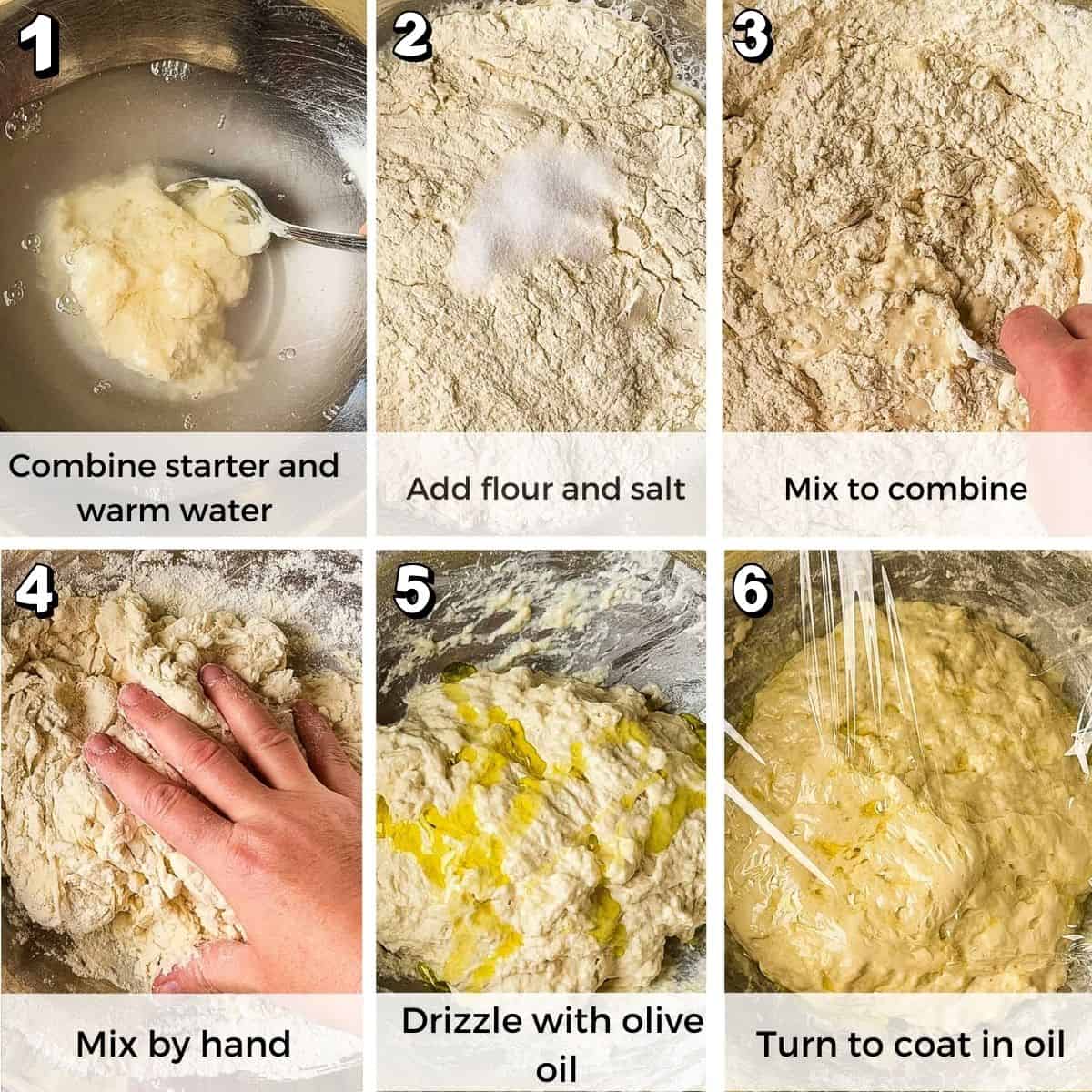
Add 100g of your active sourdough starter to a large mixing bowl with 375g of warm water, and stir to combine. Add 500 g of bread flour and 10g of sea salt. Mix until no dry flour remains. I usually finish mixing the dough with my hands. If you wet your hands with water, they won't stick as much. The dough will be very wet and sticky. This is normal.
Pour 1 tablespoon of olive oil over the dough and turn it so it is fully coated. Cover the mixing bowl with plastic wrap and rest for 30 minutes. Sticky dough = airy focaccia. Do not add extra flour.
Stretch and Folds (Adds height and bigger bubbles)
Every 30 minutes for 1-1.5 hours, do a quick set of stretch and folds right in the mixing bowl:
- Grab a section of dough
- Stretch it up
- Fold it over itself
- Turn the bowl
- Repeat 3-4 times


First Rise (or Bulk Rise) (5-7 hours)
Cover the bowl tightly and place it in a warm spot (an oven with the light on works great). My oven has a PROOF mode, so that's what I use. It's ready when:
- It has doubled
- The surface looks airy
- It jiggles when the bowl is shaken
- You see bubbles along the sides
If your kitchen is cool, you'll need a longer rise time. Trust the dough more than the clock.


Transfer to Pan (2 minutes)
Line a 9×13-inch pan with parchment paper. Add 2 tablespoons of olive oil to the bottom of the pan. Gently scrape the dough into the pan. DO NOT punch it down. Oil your hands and stretch the dough toward the edges. If it resists, leave it alone - it will relax during the second rise.
Second Rise (1-2 hours)
Cover the pan with plastic wrap and let the focaccia dough rest until it looks light and puffy. If the dough hasn't naturally spread to the corners, stretch it one more time. You should see surface bubbles - that's your fermentation at work.


Dimpling + Toppings
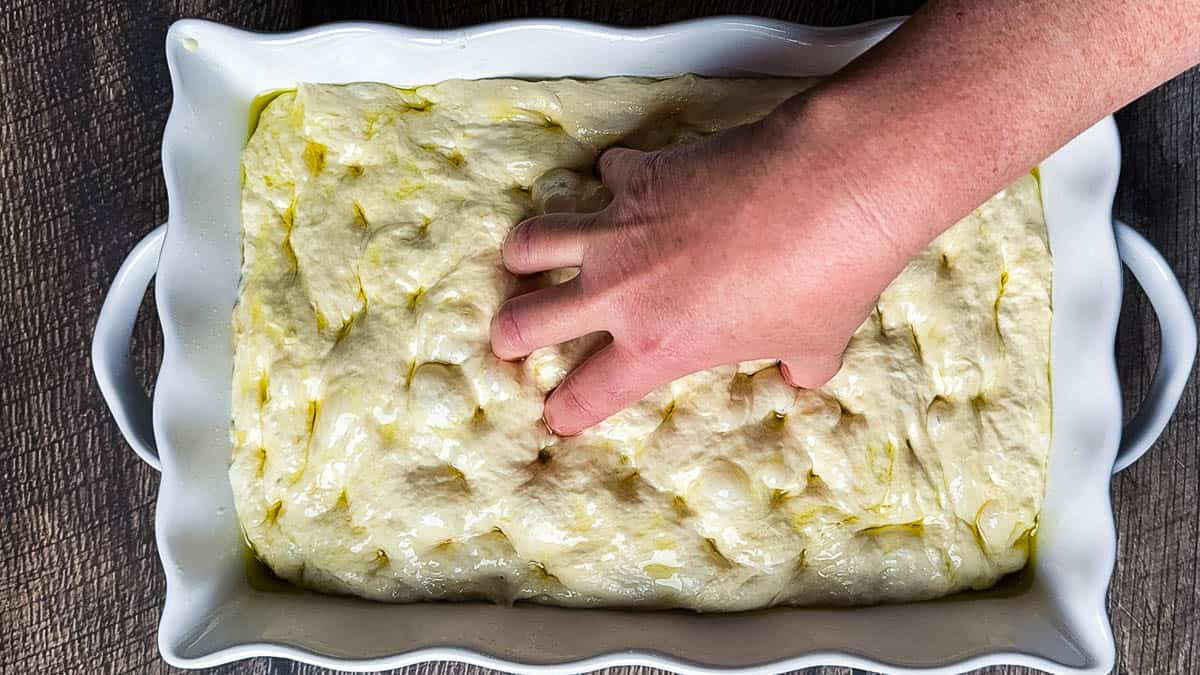
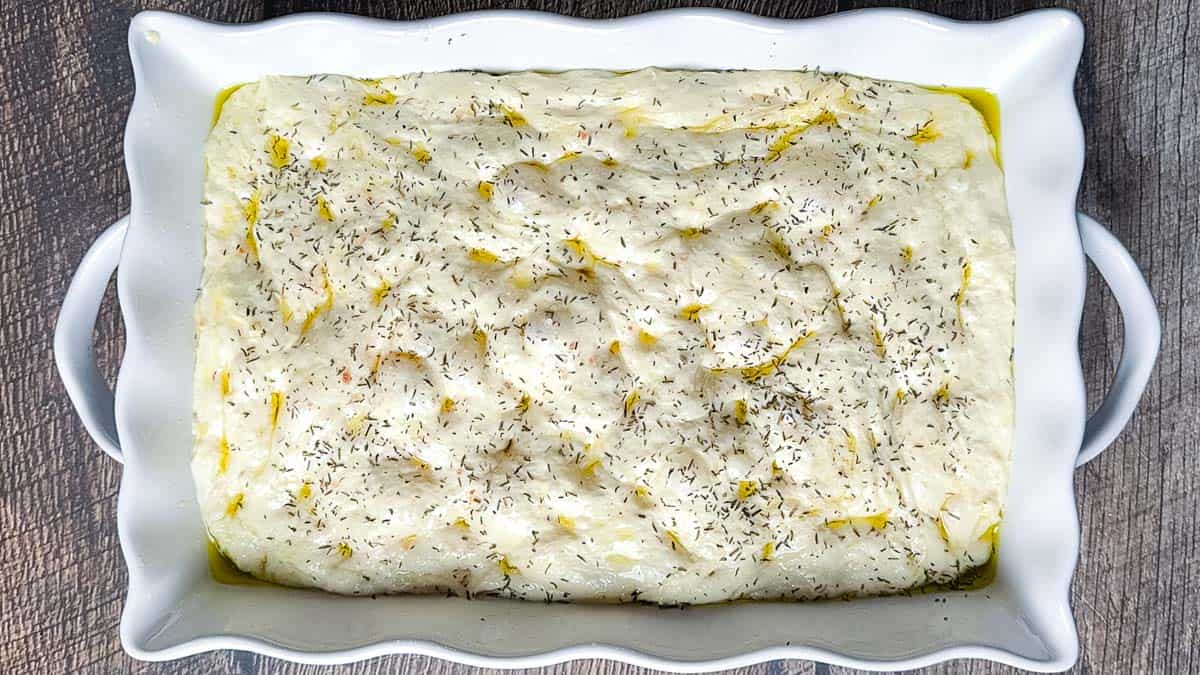
Preheat oven to 450°F. Drizzle 1 tablespoon of olive oil over the top of the dough. Press your fingertips straight down to form deep dimples. Sprinkle with coarse sea salt, herbs, or any toppings you like.
Bake (20-25 minutes)
Bake for 20-25 minutes at 450°F until the top is golden brown with crisp edges.
Cool & Slice
Cool for 10 minutes in the baking dish. Transfer to a wire rack. Cut into squares and serve. Enjoy!

Variations
You can add any toppings you like. Some of my favorites are:
- Fresh rosemary + coarse salt
- Cherry tomatoes + basil or oregano
- Olives + thyme
- Garlic butter + Parmesan
Jeri's Top Tips
- Your dough will feel sticky. That is exactly what you want for focaccia. Don't add more flour to "fix" it. The hydration is what gives you those beautiful air pockets and that soft, pillowy center.
- Use more olive oil than you think. This is the secret to those crisp, golden edges that make everyone hover around the pan waiting for you to cut it.
- If the dough won't stretch to the corners, stop. Let it rest for 15-20 minutes and it will relax. Forcing it makes it tighten up even more.
- Metal pans brown better. A 9×13 metal pan gives you the best crust. Glass works, but the bottom won't get as crisp.
- Cold ferment. If you want a deeper sourdough flavor, place the dough in the fridge after the bulk rise and bake it the next day. It's almost impossible to mess up.
- Watch the bake near the end. Every oven runs differently. If your focaccia looks pale, give it an extra minute or two - but don't walk away.
Storage Instructions
Focaccia keeps really well. Once it has cooled, wrap it tightly or place it in an airtight container. It stays fresh at room temperature for about 2 days. To bring back the crisp edges, warm it in the oven at 350°F for 8-10 minutes.
For longer storage, freeze the focaccia after it has cooled completely. Cut it into squares, wrap each piece, and place them in a freezer-safe bag. It freezes for up to 2 months. Let it thaw at room temperature, then reheat at 350°F until warm and crisp again.
If you want to make it ahead, bake it the day before, cool it fully, wrap it well, and reheat just before serving.
Serving Ideas
- Cut thick squares for sandwiches
- Pair with soups and stews
- Serve with olive oil + balsamic
- Use as a base for focaccia pizza
- Slice and toast for breakfast

More Easy Sourdough Bread Recipes You'll Love
Printable Recipe

Best Ever Sourdough Focaccia
Ingredients
Levain (Night Before)
- 25 grams mature sourdough starter
- 75 grams unbleached bread flour or all-purpose flour
- 75 grams warm water (90°F)
For the Dough:
- 100 grams active sourdough starter (heaping ⅓ cup)
- 375 grams warm water (90°F)
- 500 grams bread flour or unbleached all-purpose flour (3½ cups + ½ teaspoon)
- 10 grams fine sea salt (2⅛ teaspoons)
- 4 tablespoons olive oil divided
Toppings (Optional):
- Flaky sea salt
- Fresh rosemary or thyme (or use dried)
- Sliced cherry tomatoes, red onion, or olives
Instructions
- The evening before, combine 25g of mature starter with 75g of flour and 75g of warm water (90°F) in a clean jar. Stir until the mixture is smooth and no dry flour remains. Cover loosely and leave it at room temperature for 8-12 hours. By morning, the levain should be doubled in size, bubbly from top to bottom, and smell pleasantly tangy.
- The next morning, add 100g of your active sourdough starter (levain) to a large mixing bowl along with 375g of warm water. Whisk to break up the starter completely. Add 500g of white bread flour and 10g of sea salt. Stir until all the flour is hydrated and a sticky, shaggy dough forms. This dough will be much wetter than a standard sourdough loaf - that's exactly what gives focaccia its airy crumb. Use your hands to finish mixing the dough if needed. Pour 1 tablespoon of olive oil over the top, turn the dough to coat it, and cover the bowl with plastic wrap. Let it rest for 30 minutes.
- After the rest, give the dough a few quick stretch-and-folds to help build strength. Simply lift a section of dough up, fold it over itself, turn the bowl, and repeat a few times. Do this every 30 minutes for 1 to 1½ hours. The dough will begin to look smoother and more elastic.
- Once the folds are done, cover the bowl tightly with plastic wrap and place it in a warm spot for the first rise. An oven with just the light on works perfectly. Let it rise for 5-7 hours, or until it has doubled in size, looks airy on top, and jiggles when the bowl is gently shaken. If your kitchen is cooler, give it more time-focaccia dough should look lively before moving on.
- When the dough is fully risen, line a 9×13-inch baking pan with parchment paper and pour 2 tablespoons of olive oil into the bottom. Gently scrape the dough into the pan, trying not to deflate it. With oiled hands, ease the dough toward the edges. If it pulls back or resists, stop and let it rest during the next rise.
- Cover the pan and let the dough rise again for 1-2 hours. It should look light and puffy, with visible bubbles across the surface. If it hasn't naturally spread to the corners, stretch it one more time.
- Preheat your oven to 450°F. Drizzle the remaining tablespoon of olive oil over the top of the dough. Press your fingertips straight down to create deep dimples across the surface. Add flaky sea salt, fresh herbs, or any toppings you like.
- Bake for 20-25 minutes, or until the focaccia is beautifully golden with crisp edges. If you prefer a deeper color, leave it in a couple extra minutes, but watch it closely.
- Let the focaccia cool in the pan for 10 minutes, then transfer it to a wire rack. Slice into squares and serve warm or at room temperature.
- If you loved this recipe, please leave a 5-star rating and review below!
Save This Recipe 💌
Notes
- Active, bubbly starter will give you the best rise and lightest texture. If your starter sinks in water, give it another feeding before beginning.
- The dough will feel very wet and sticky when you mix it. This is exactly what you want for focaccia. Wet dough creates those airy pockets and the soft, pillowy crumb.
- If your house runs cool, your fermentation times will be longer. Find a warm spot (your oven with just the light on is great) to keep the dough moving along at the right pace.
- When you transfer the dough to the pan, be gentle. Knocking out too much air will give you a flat focaccia. Let the dough do the work of spreading itself during the second rise.
- Don't rush the dimpling step. Pressing your fingertips straight down (without poking holes through) creates those signature "olive oil pools" that crisp up so nicely in the oven.
- Bread flour gives the best structure, but all-purpose flour works well here too. Your crumb may be slightly softer-still delicious.
- For extra flavor, top focaccia with fresh or dried rosemary, tomatoes, olives, onions, or garlic right before baking.
- Store focaccia at room temperature, wrapped or in an airtight container, for up to 2 days. To refresh the crisp edges, reheat leftovers in a 350°F oven for 8-10 minutes. For longer storage, freeze slices in an airtight container for up to 2 months.
Nutrition
The provided nutrition information is automatically calculated. Accuracy is not guaranteed.


Terry says
Tried this yesterday with a garlic confit as my add on and I have to say it came out much better than my regular focaccia bread. This was very easy to prep and the first rise was quite substantial. Now to find a sourdough cinnamon roll recipe. Guess this is what happens when a guy that likes to cook retires, my wife is not complaining lol.